
OpenSOC SEA-NREN
A regional project building security operations capability for national research and education networks (NRENs), so each can set up and run its own Security Operations Centre.
About the project
Building SOC capability across the region
Emerging research and education networks in the region often operate with limited budgets, technical expertise and resources, which leaves them exposed to cyber threats. OpenSOC uses a communities-of-practice approach to build their capability to detect and respond to attacks.
BitRanger proposed OpenSOC and won support for it through a USD 85,000 ISIF Asia grant from the APNIC Foundation in 2025. In 2026, a USD 15,000 APAN matching grant extended the project to two National Research and Education Networks in South Asia.
Partner NRENs come from eleven countries: Cambodia, Indonesia, Laos, Malaysia, Myanmar, the Philippines, Singapore, Thailand and Timor-Leste in Southeast Asia, and Bangladesh and Nepal in South Asia.
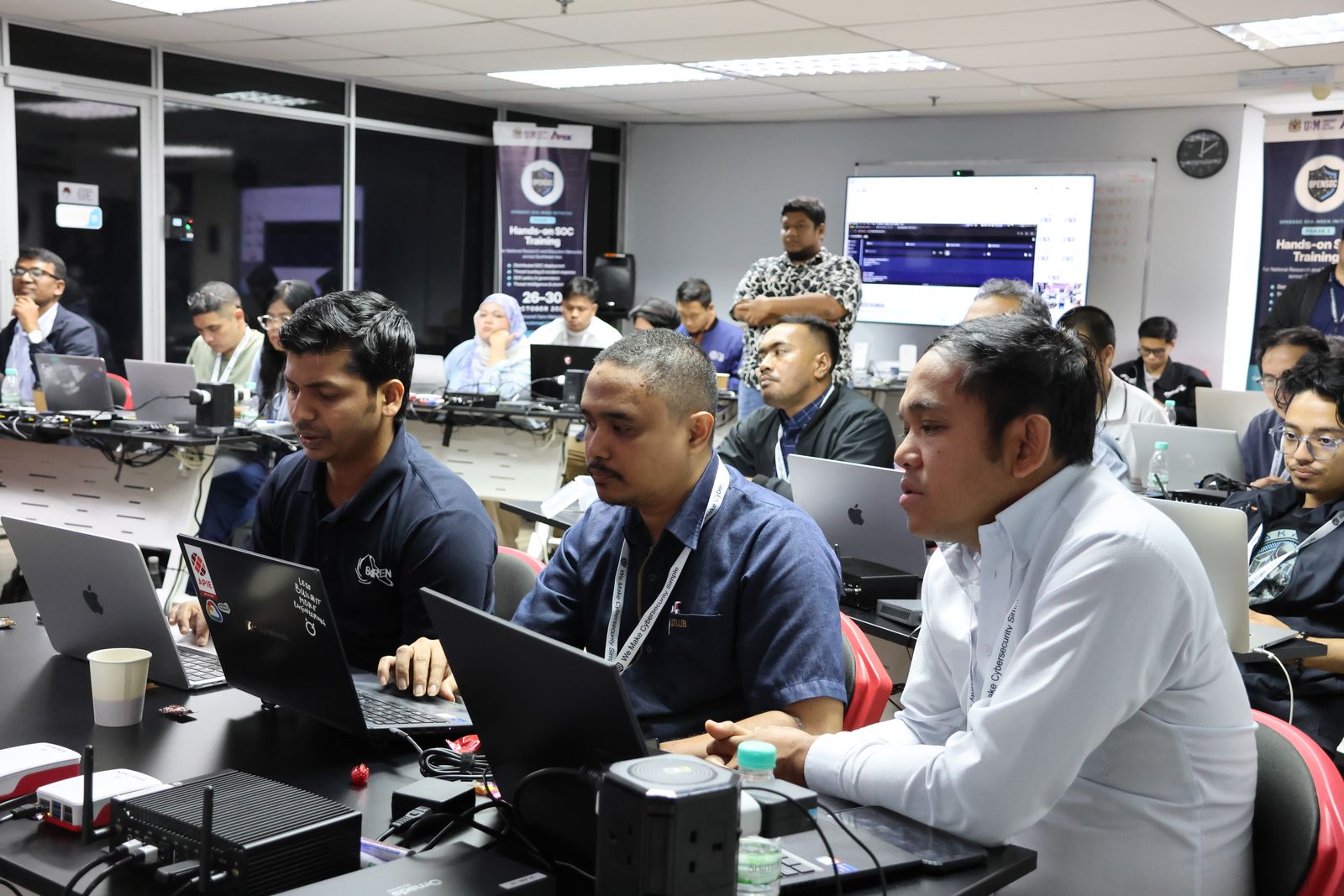
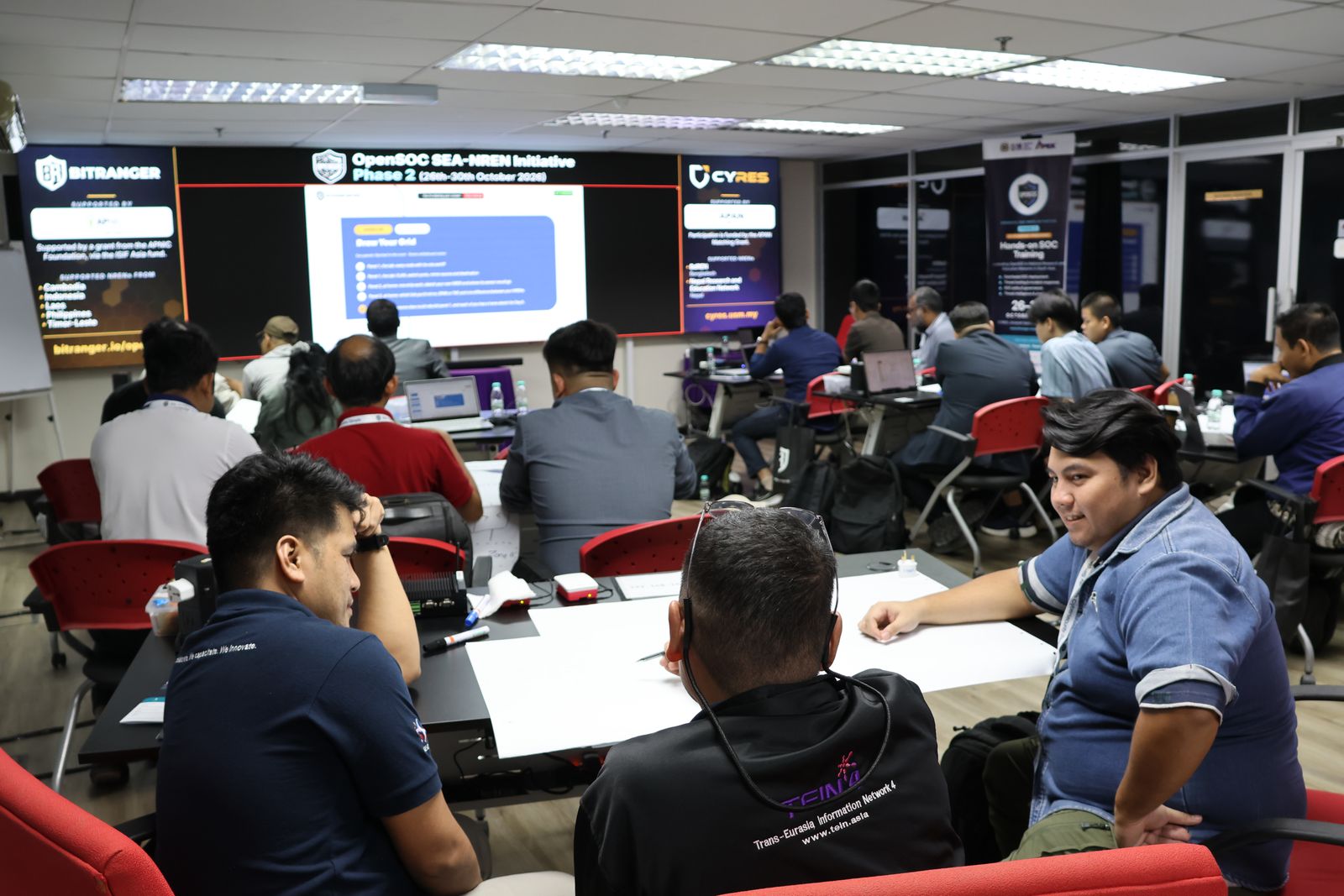
Phase 2, hands-on SOC training (completed): 21 technical staff from seven NRENs, in Bangladesh, Cambodia, Indonesia, Laos, Nepal, the Philippines and Timor-Leste, trained for five days at CYRES, Universiti Sains Malaysia, Penang, from 26 to 30 October 2026, with colleagues from Malaysia, Myanmar and Thailand, including the University of Computer Studies, Yangon (UCSY), joining online. They covered distributed SOC deployment, threat hunting and incident response, SOC policy and governance, and threat intelligence sharing. Event details
Phase 1, SOC Fundamentals (completed): online training from 6 to 8 July 2026 for 23 participants from eight research and education networks in eight countries. The sessions were recorded so partner teams can revisit them.
BitRanger leads the project and delivers its SOC training and setup support.
We have presented OpenSOC to the Asia-Pacific Advanced Network community at APAN61 in Dhaka (January 2026) and APAN62 in Auckland (August 2026).
- Status
- Active, 2025 to present
- Implemented by
- BitRanger Sdn Bhd
- Funding
- APNIC Foundation ISIF Asia grant, USD 85,000. APAN matching grant, USD 15,000.
- Countries
- Eleven: nine in Southeast Asia, two in South Asia
Phase 2 · 26 to 30 October 2026
Hands-on SOC training
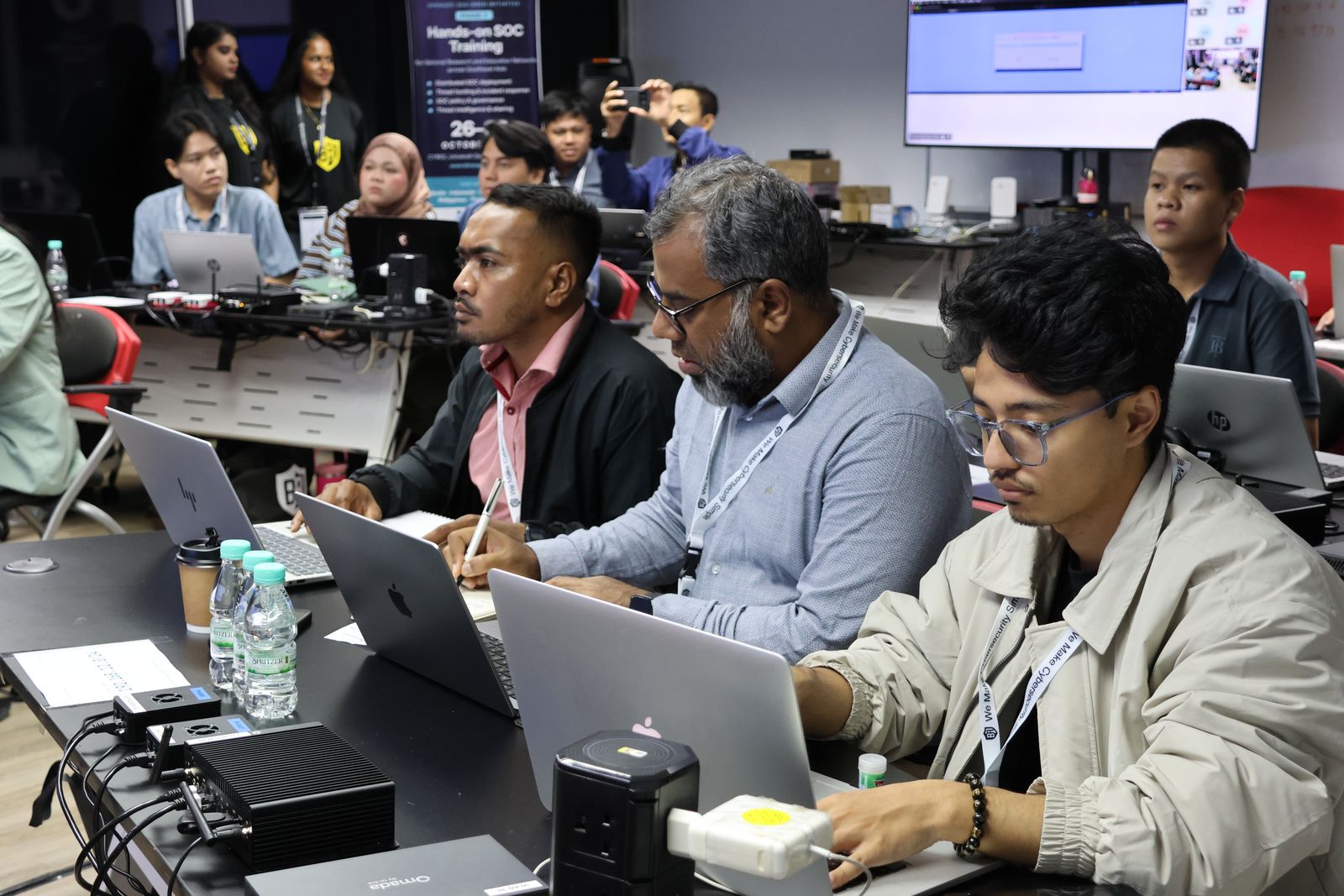
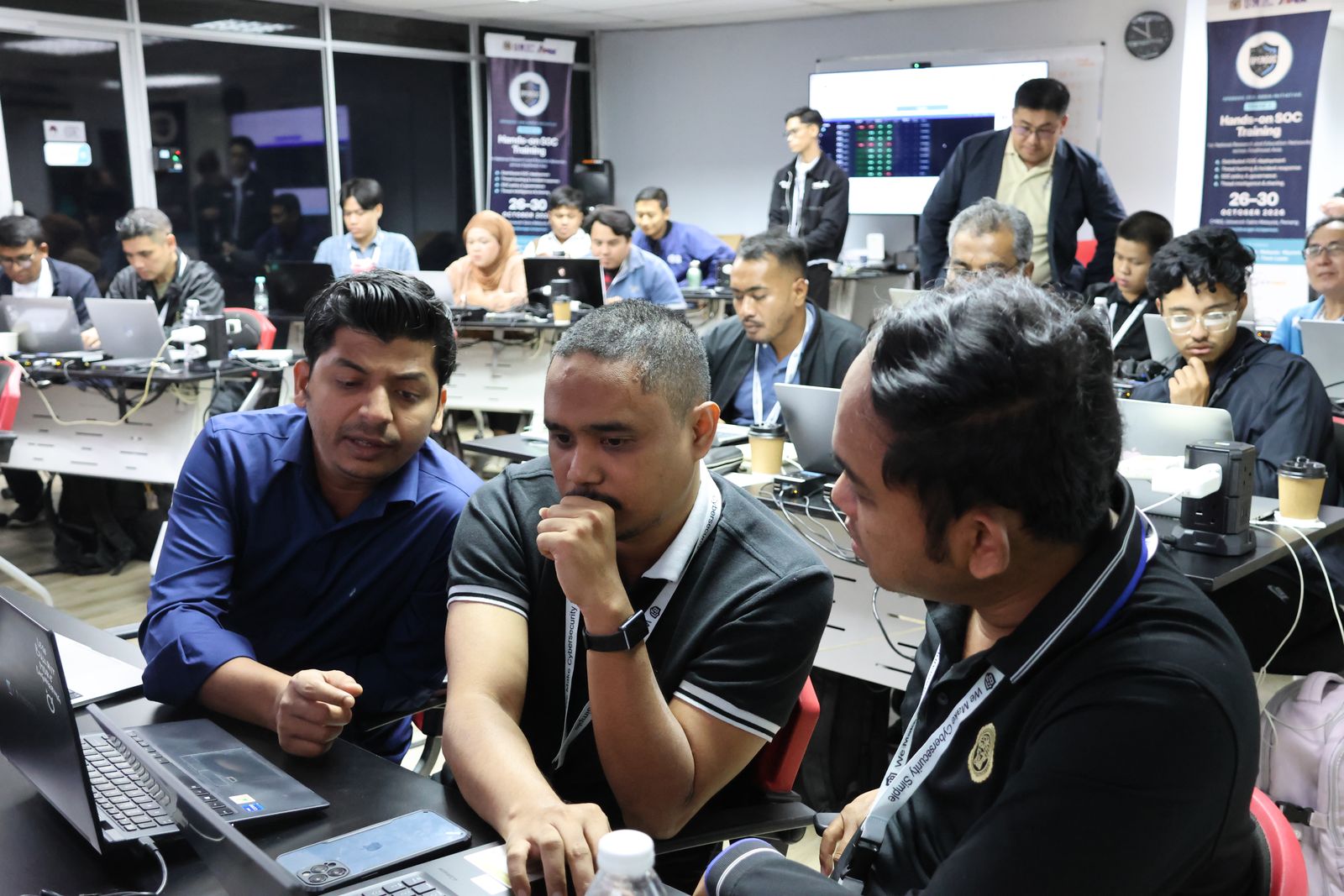
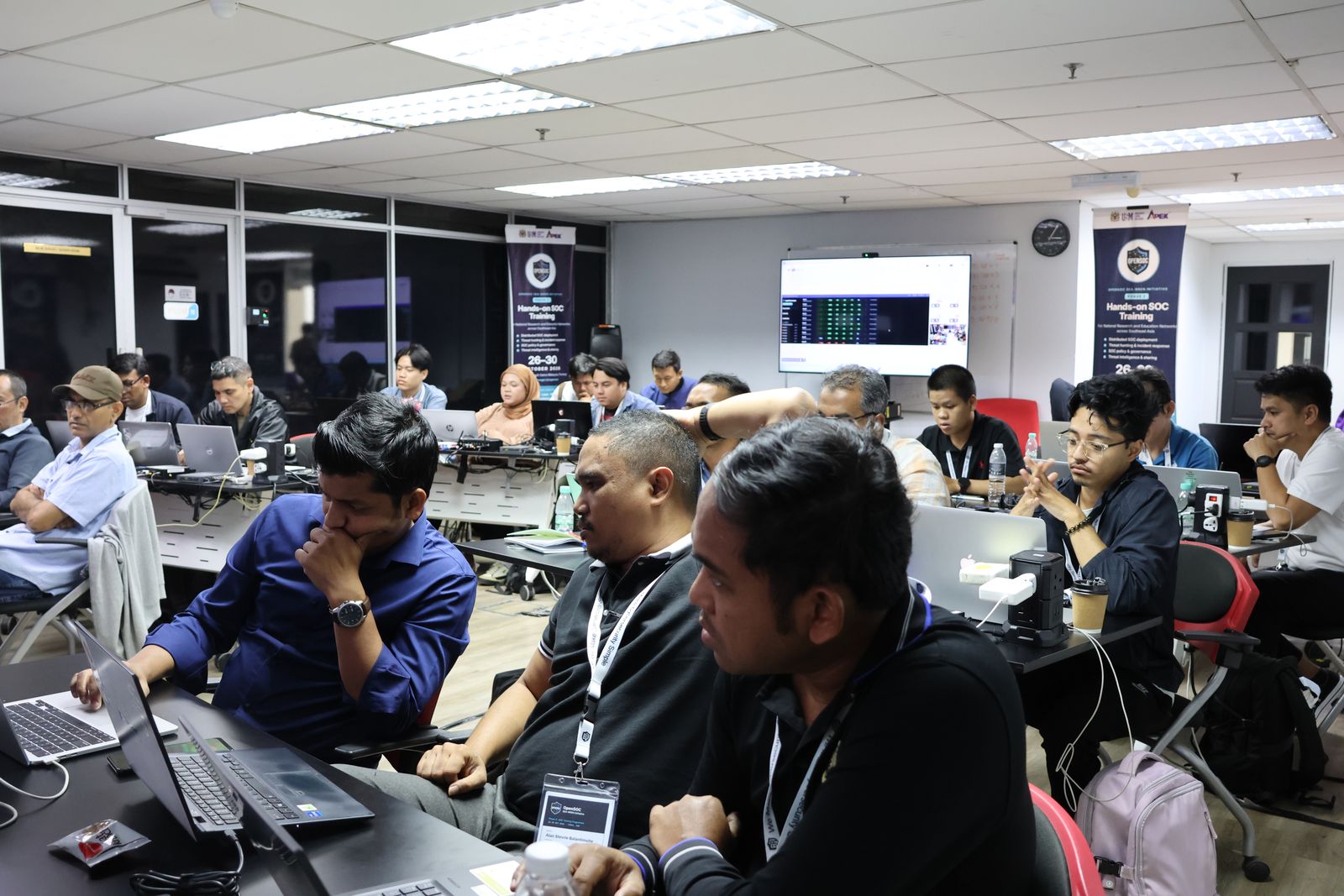
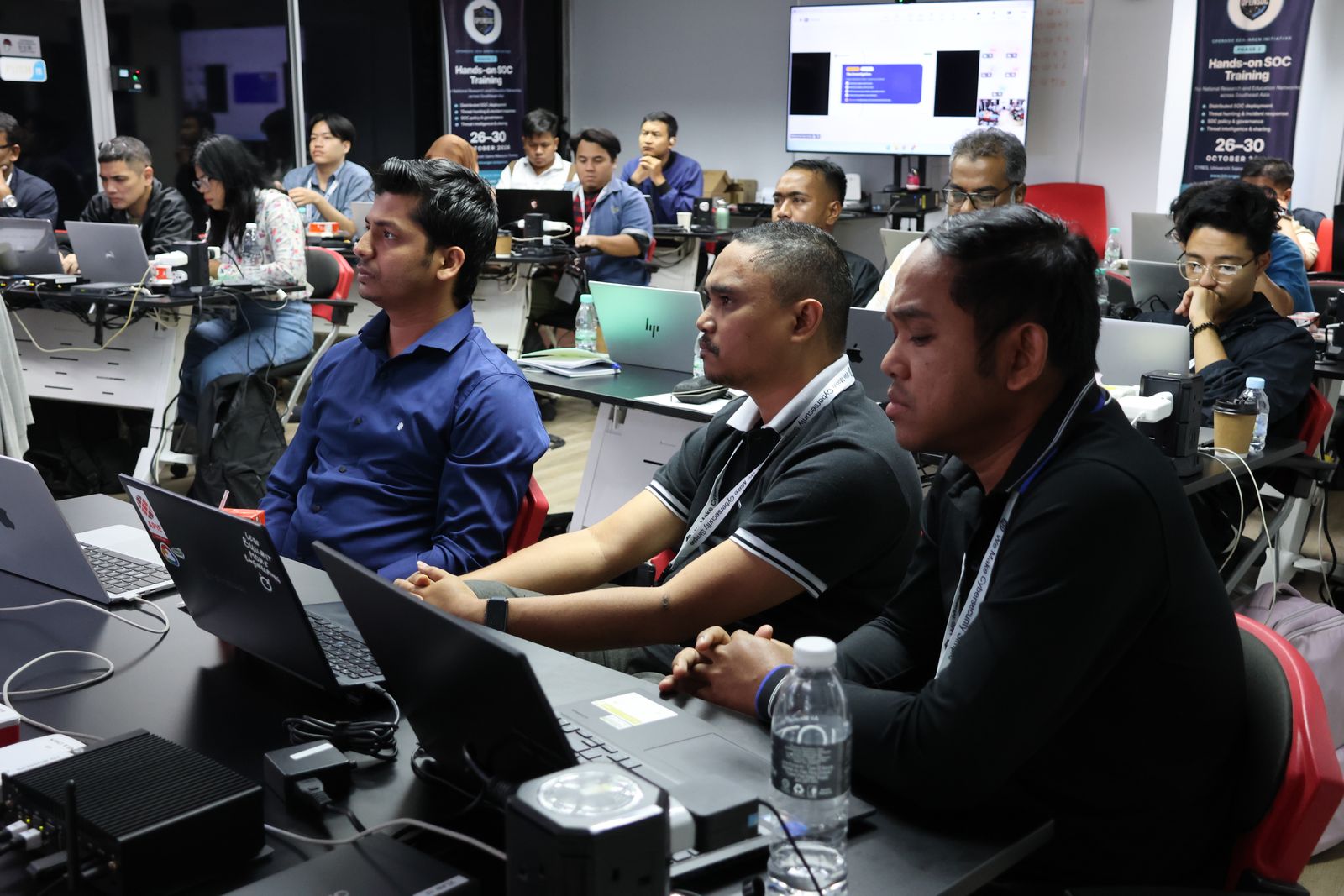
Five days at CYRES, Universiti Sains Malaysia, Penang. Each NREN team deployed a distributed, open-source SOC, hunted threats in live traffic, drafted the policies a first SOC needs, set up its own MISP server, and connected to regional threat intelligence.
SOC deployment
Distributed, open-source SOC infrastructure, built and run by each NREN.
Detection and response
Security monitoring, threat hunting and incident response workflows.
Threat intelligence sensors
Honeypots and network telescopes that capture real attack data.
Regional sharing
Threat intelligence sharing between partner NRENs using MISP.
By the end of the week, teams could
- 1Deploy a distributed, open-source SOC grid and give it eyes on your network traffic.
- 2Triage, hunt and turn alerts into cases using your own data.
- 3Draft the three policies a first SOC needs: SOC Charter, Governance and Scope, and Incident Response.
- 4Deploy a honeynet sensor and a network telescope, and feed regional threat intelligence.
What teams took home
- A 90-day deployment plan and a mentoring schedule
- Near-complete drafts of the three SOC policies
- A honeynet runbook and the team's own SOC architecture
- Regular threat intelligence from the OpenSOC MISP
Programme
Day 1 · Going live
Architecture, lab orientation, building the SOC grid, traffic mirroring and sensor setup.
Day 2 · Reading your data
Data layers and retention, triage, pivoting and packet capture analysis on your own traffic, and a free hunt.
Day 3 · Tuning and detection
Alert tuning, Suricata and Sigma rules, case management and an unguided investigation.
Day 4 · Policy day
SOC Charter, Governance and Scope, and an Incident Response policy, drafted for your own organisation, with a ransomware dry run.
Day 5 · Honeynets, telescope and closing
Honeynet deployment, network telescope, the threat intelligence loop, and each team's 90-day deployment plan.
Led by Muhammad Iqrar Amin, Prof. Dr. Selvakumar Manickam and Assoc. Prof. Dr. Shankar Karuppayah.
Phase 2 · Photo gallery
A week at CYRES
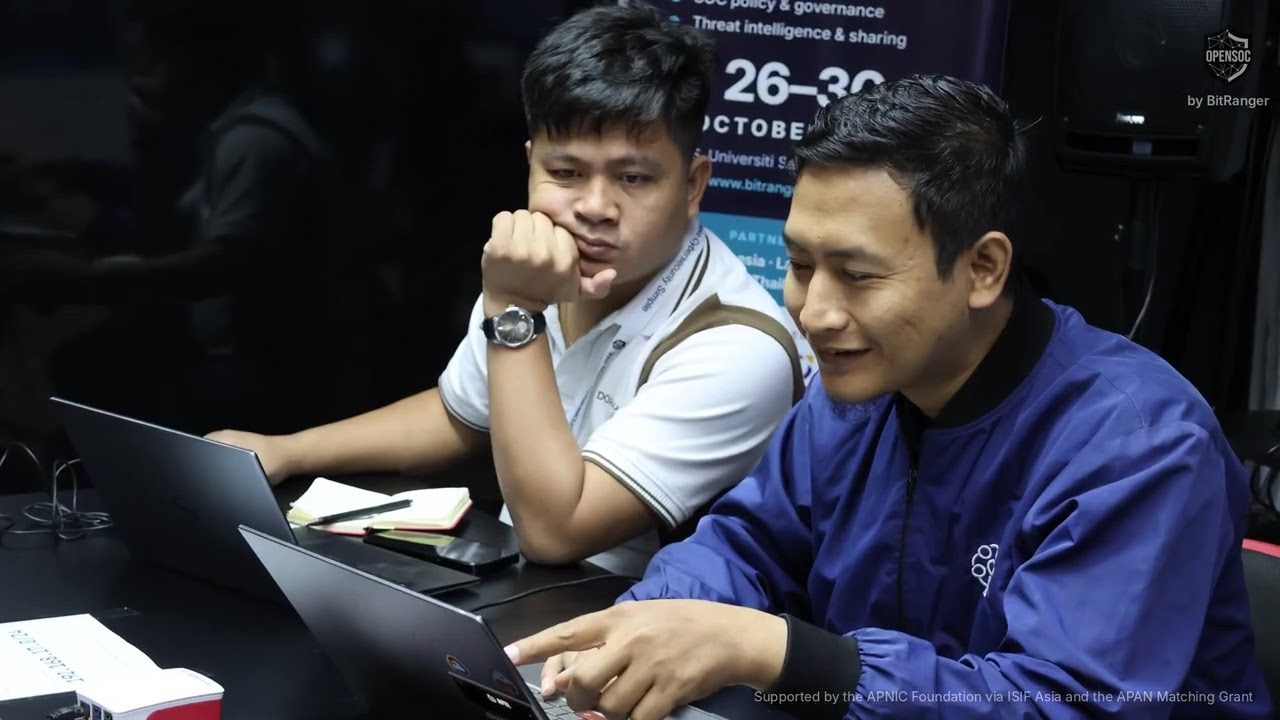
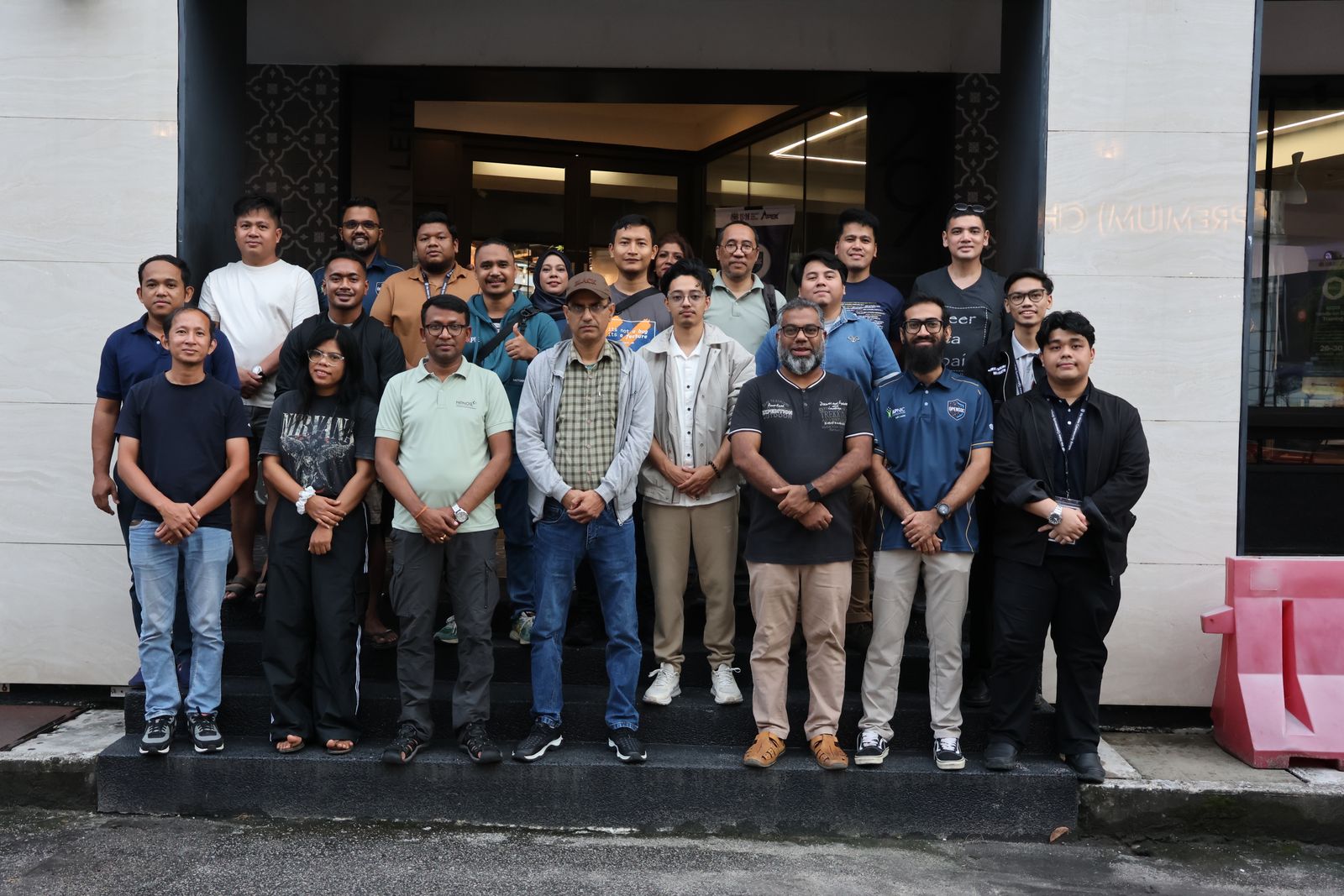
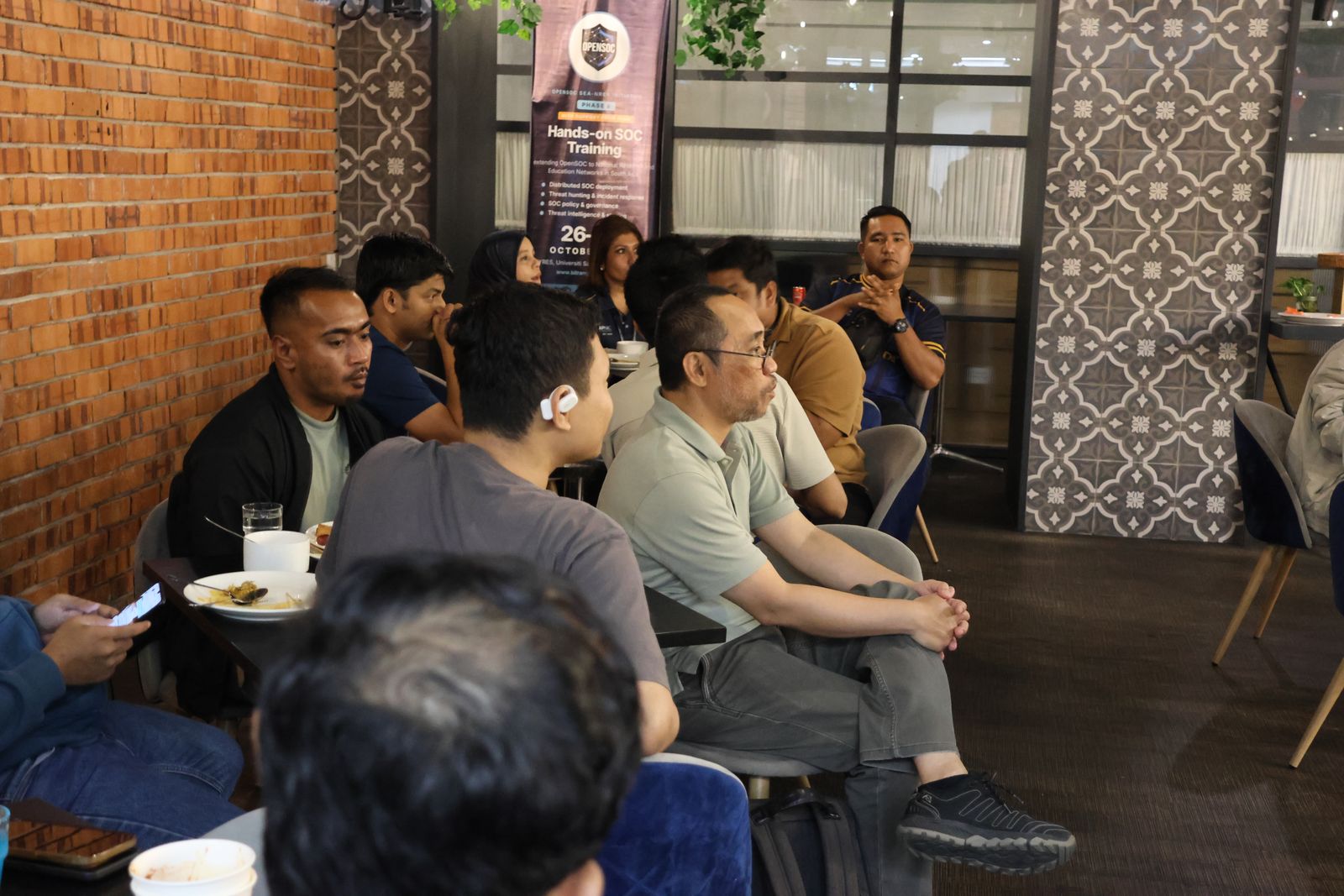
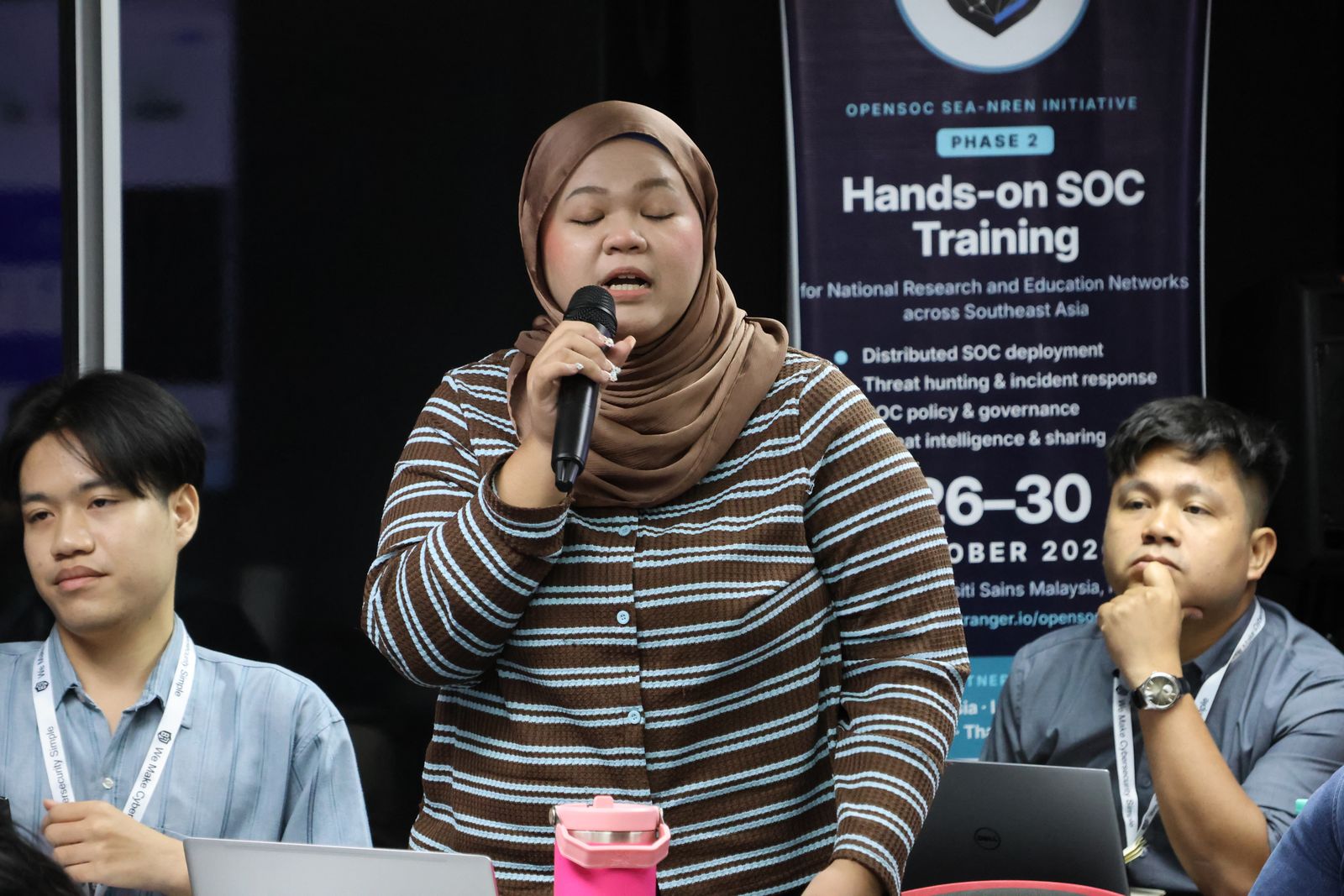
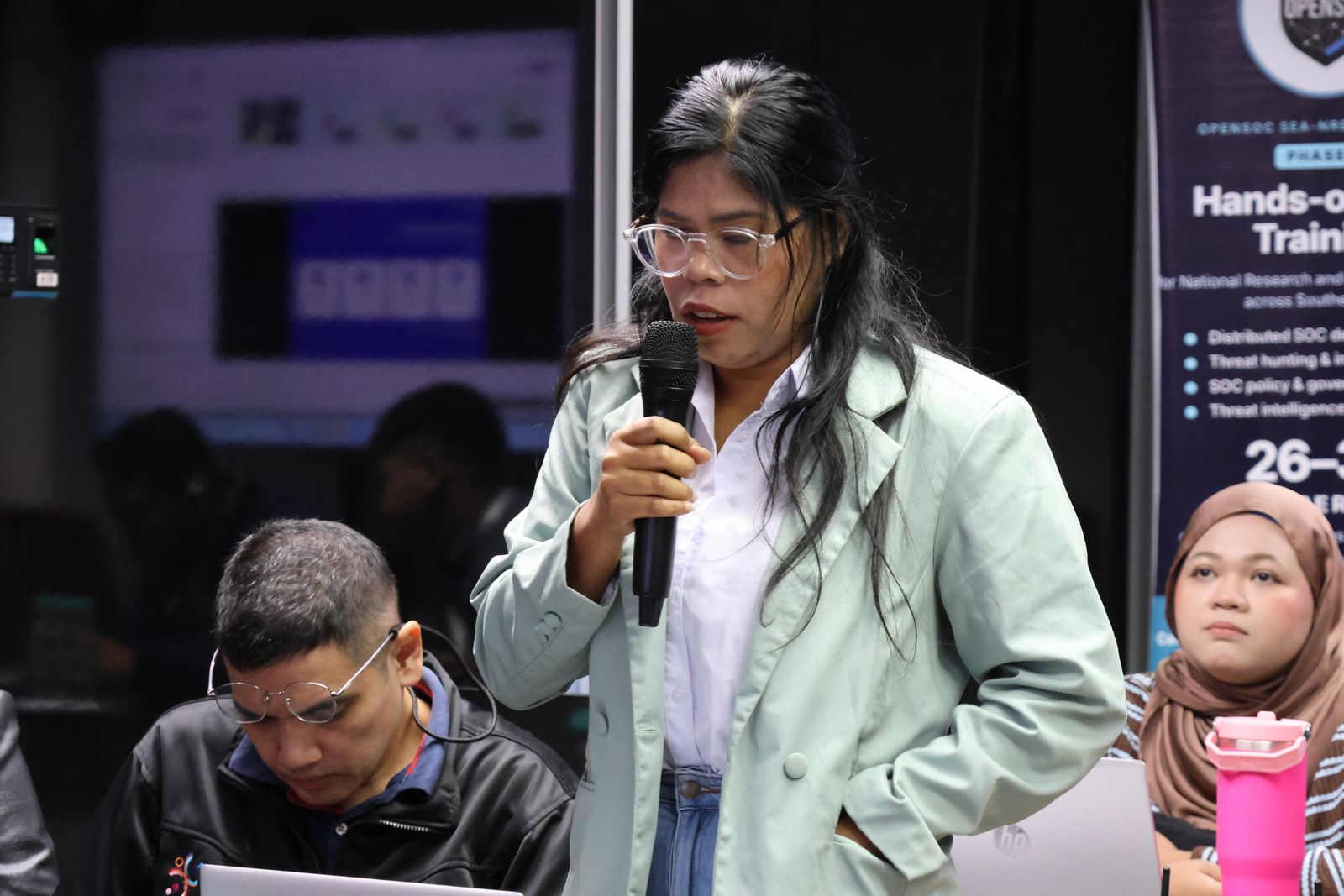
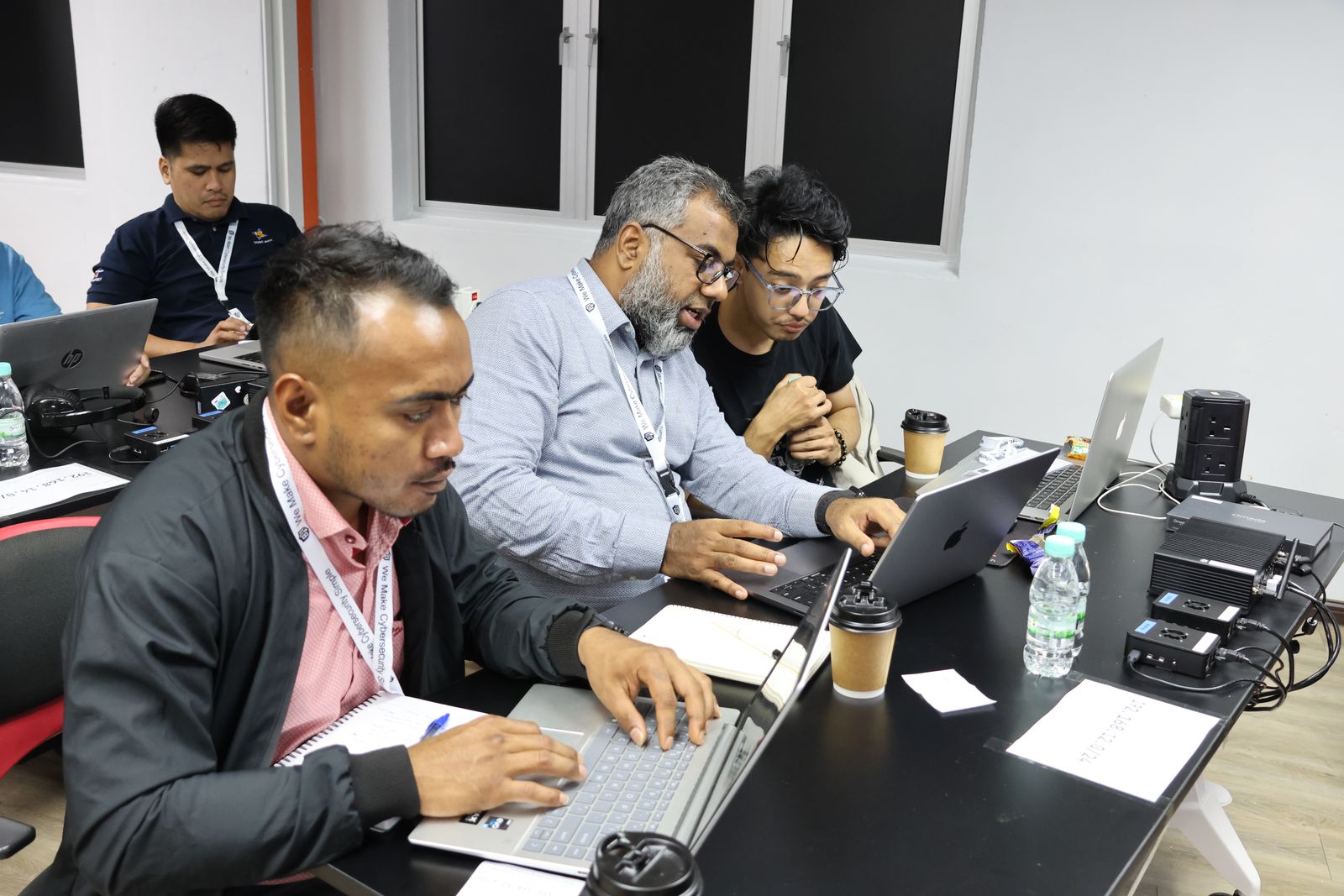
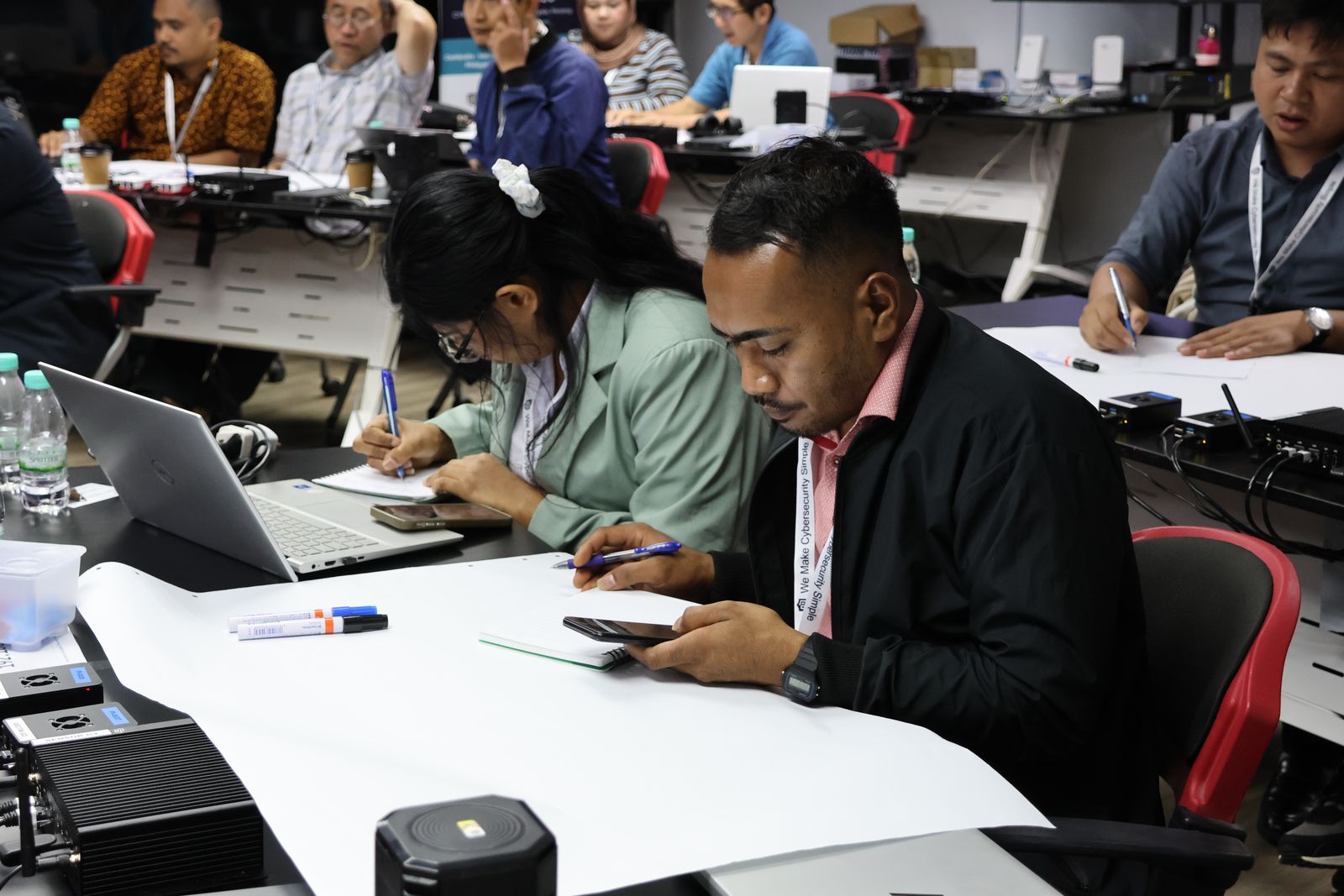
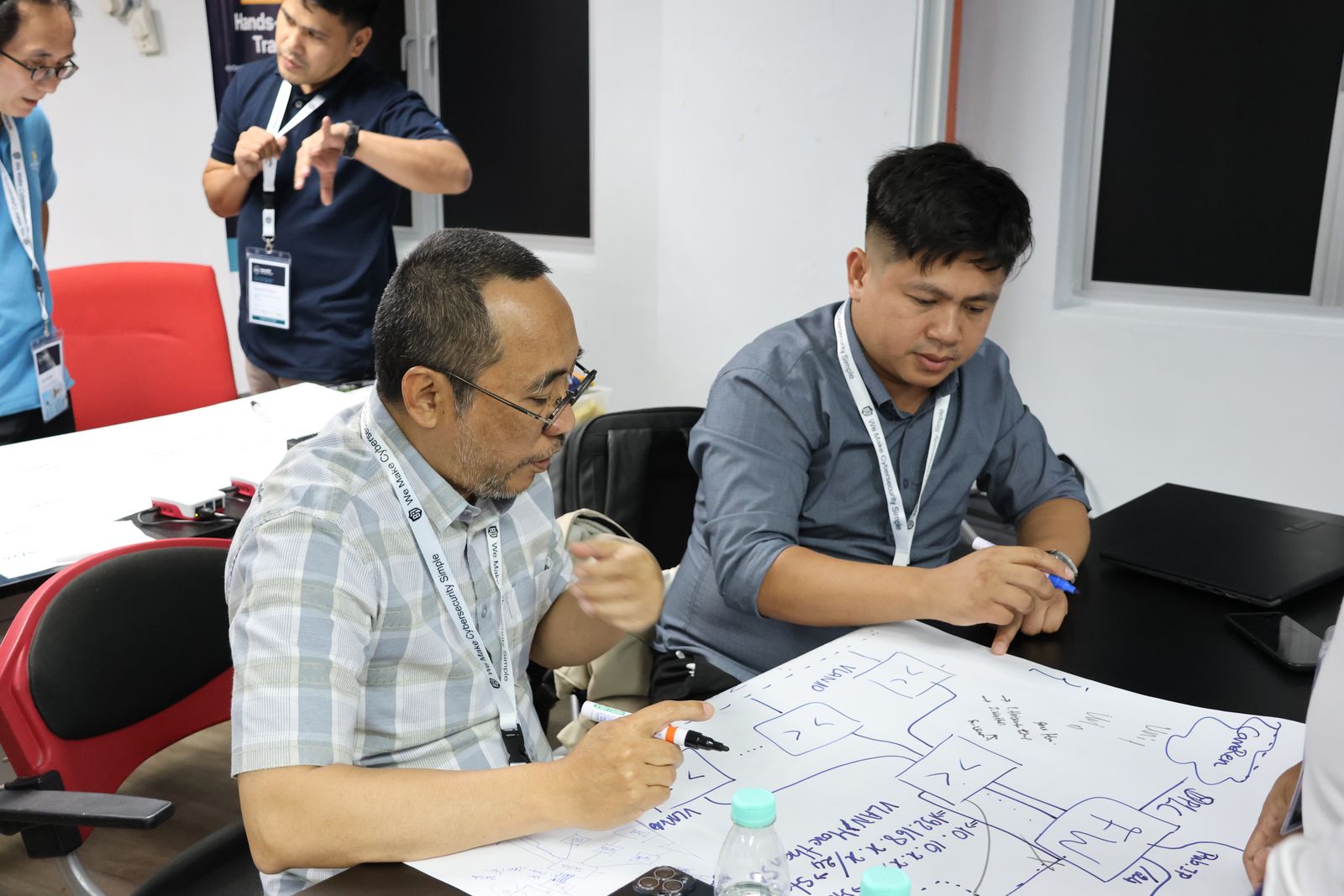
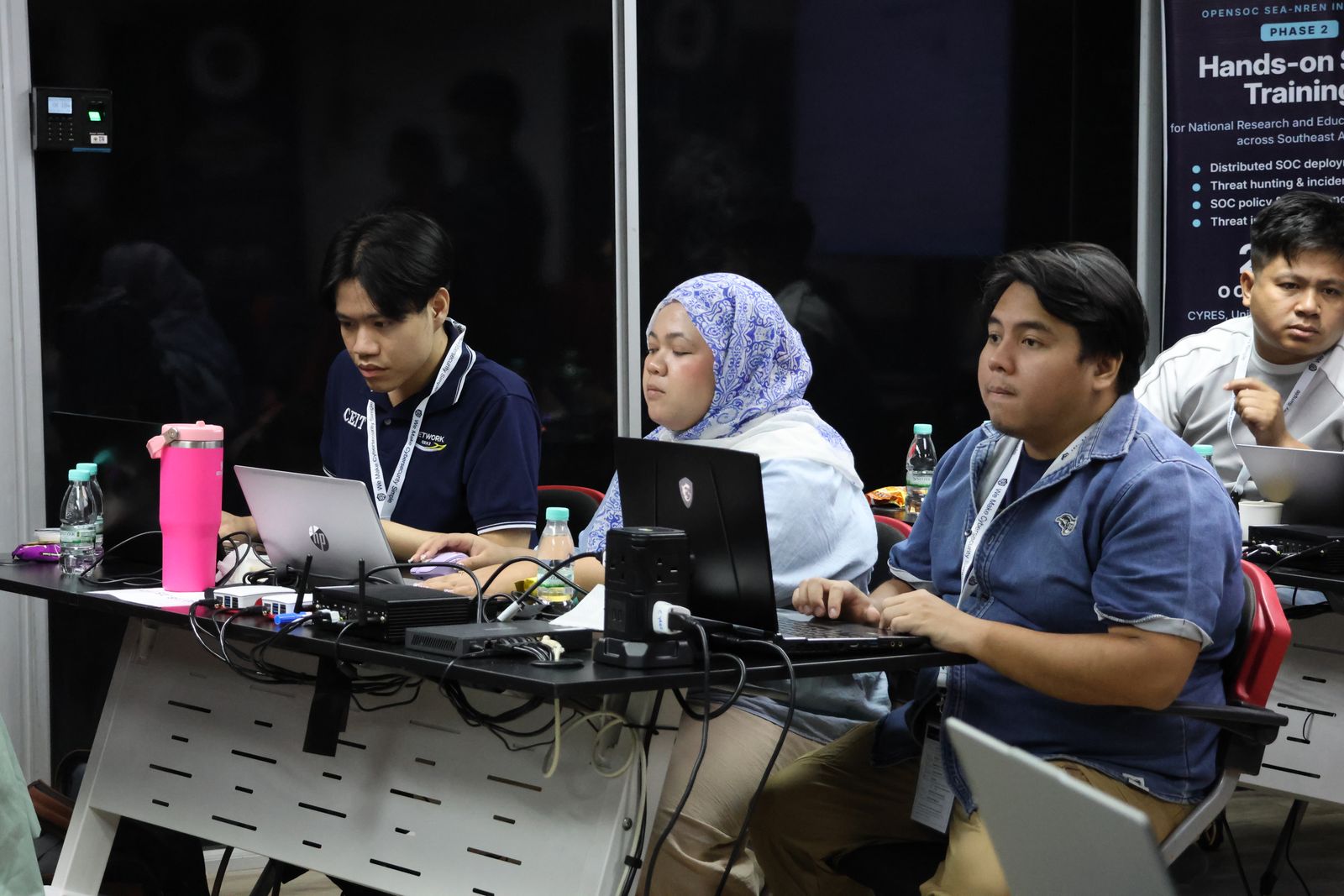
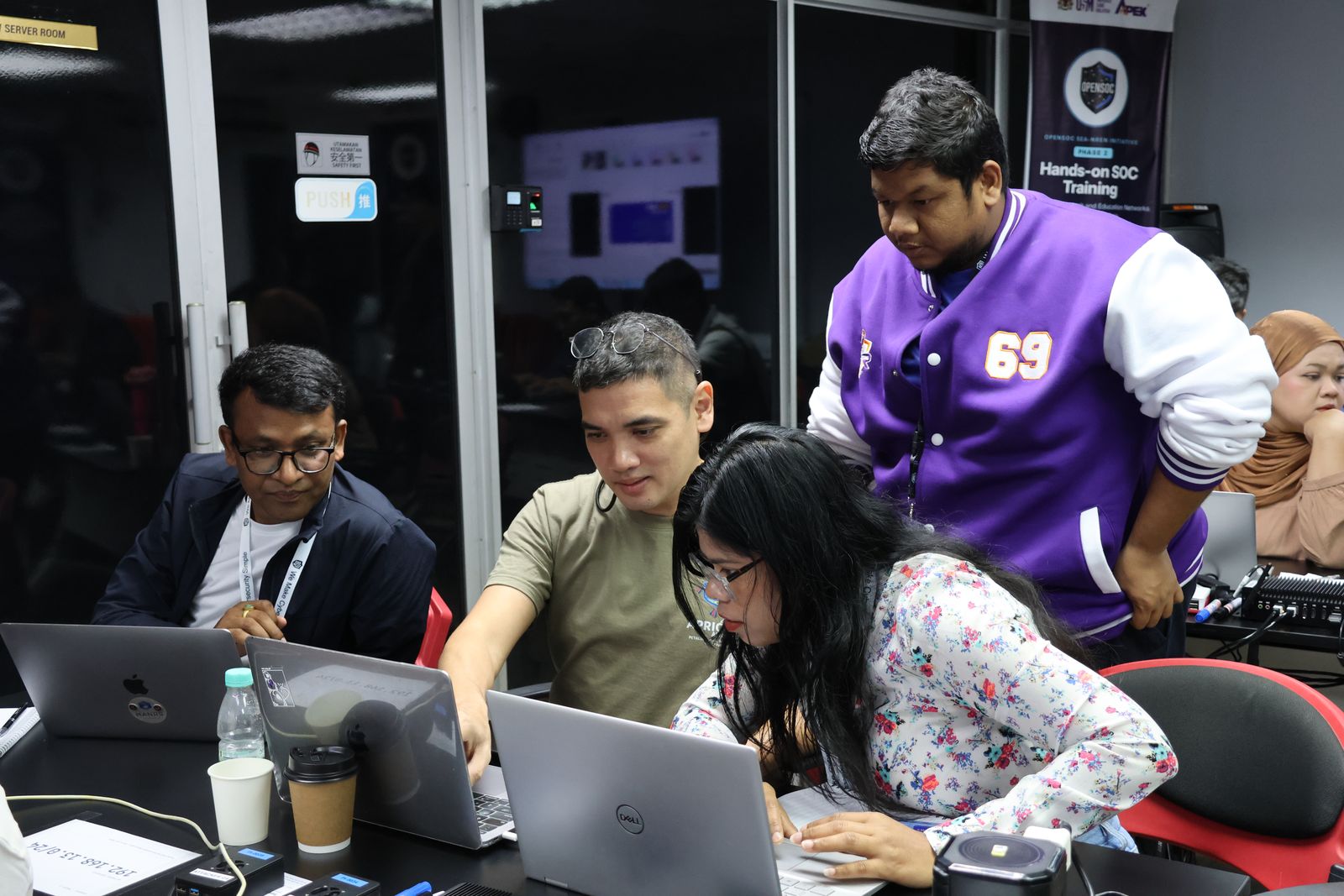
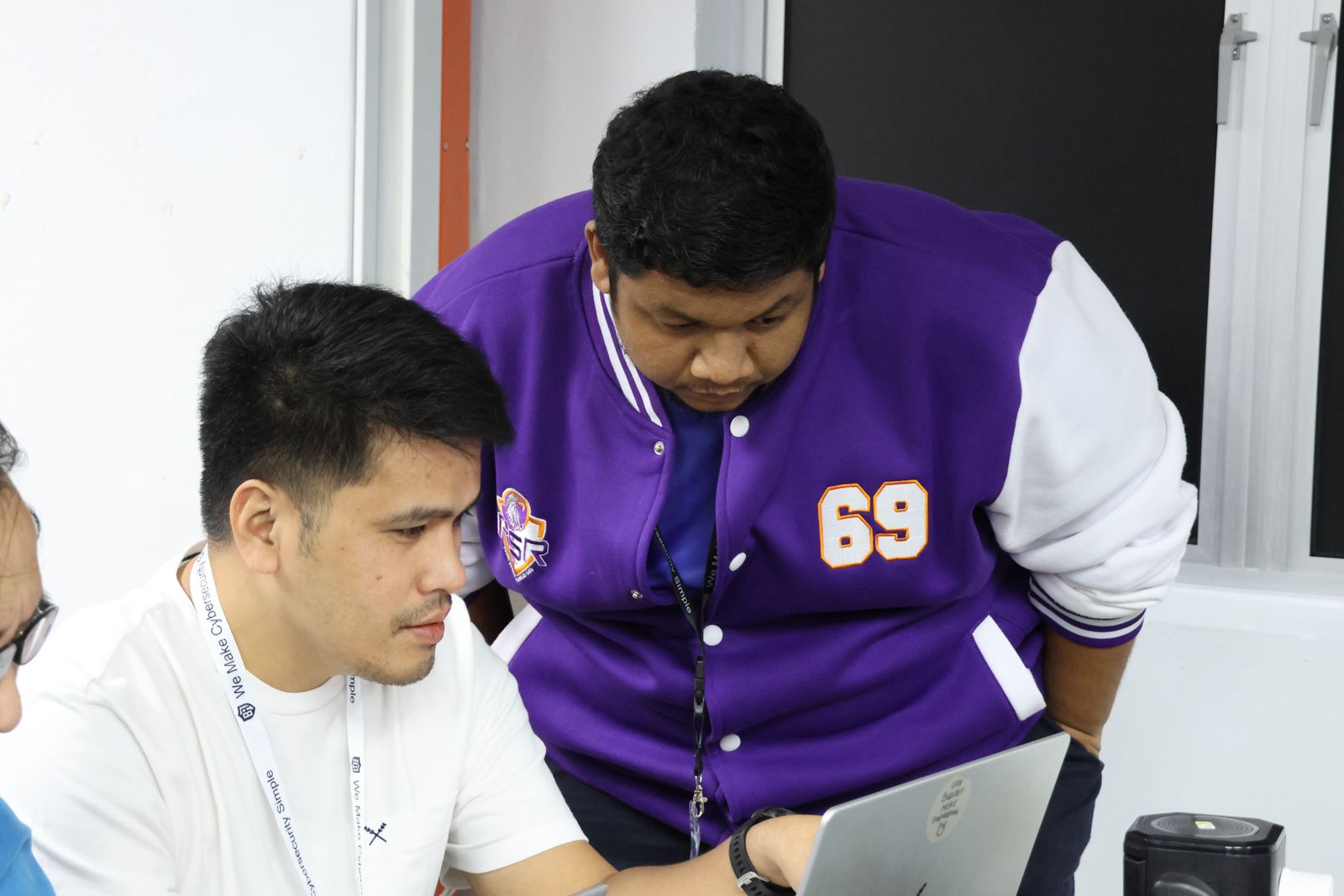
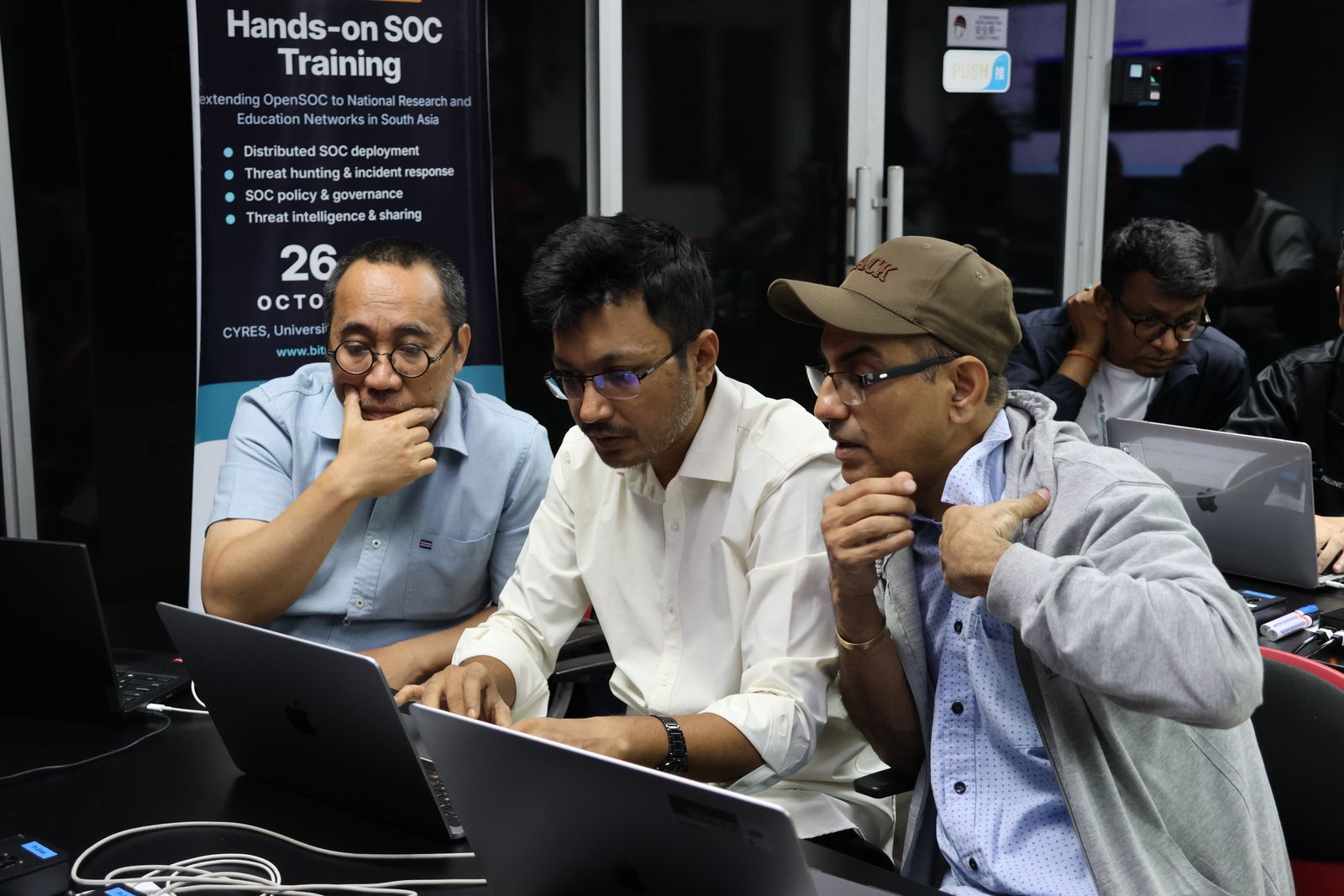
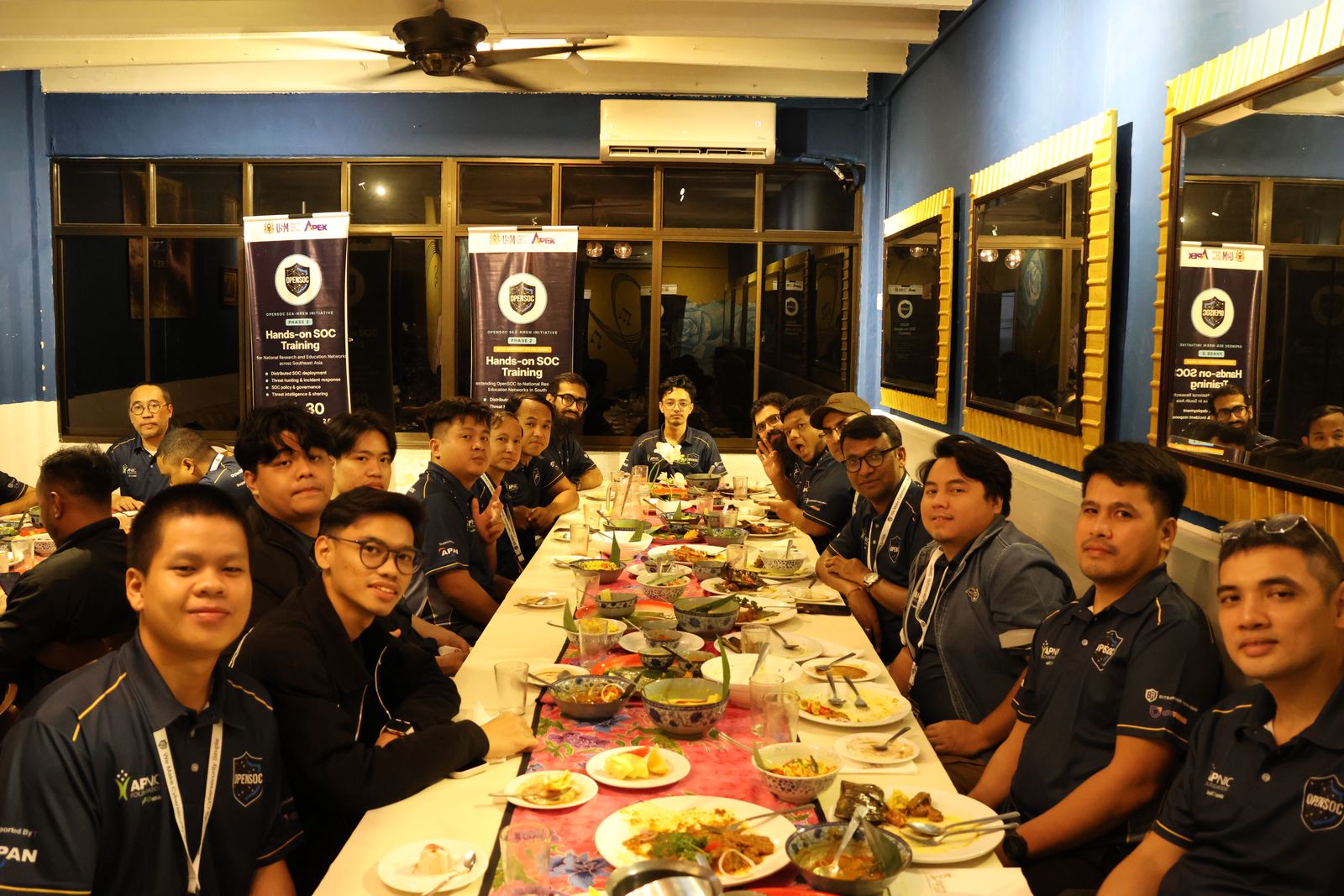
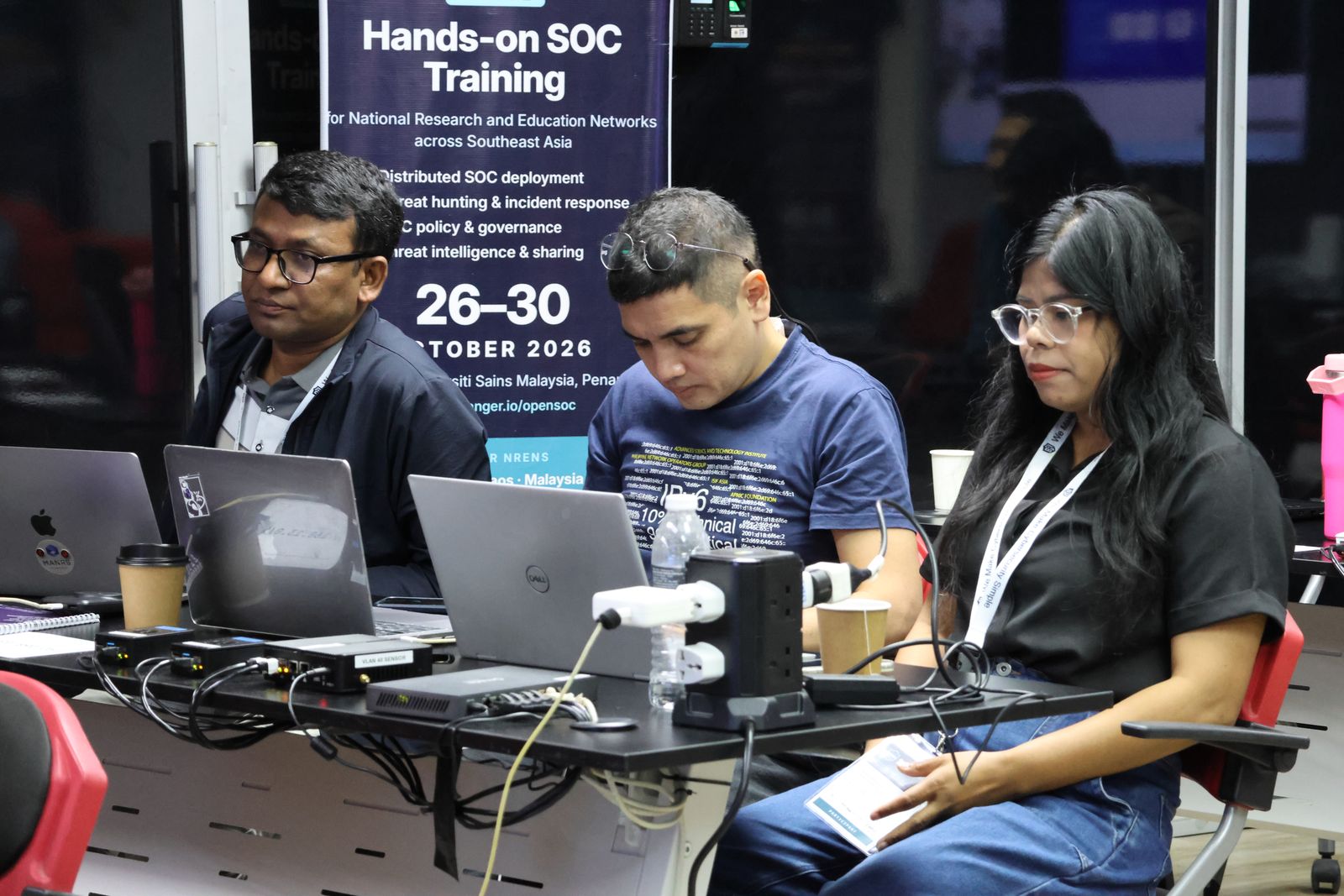
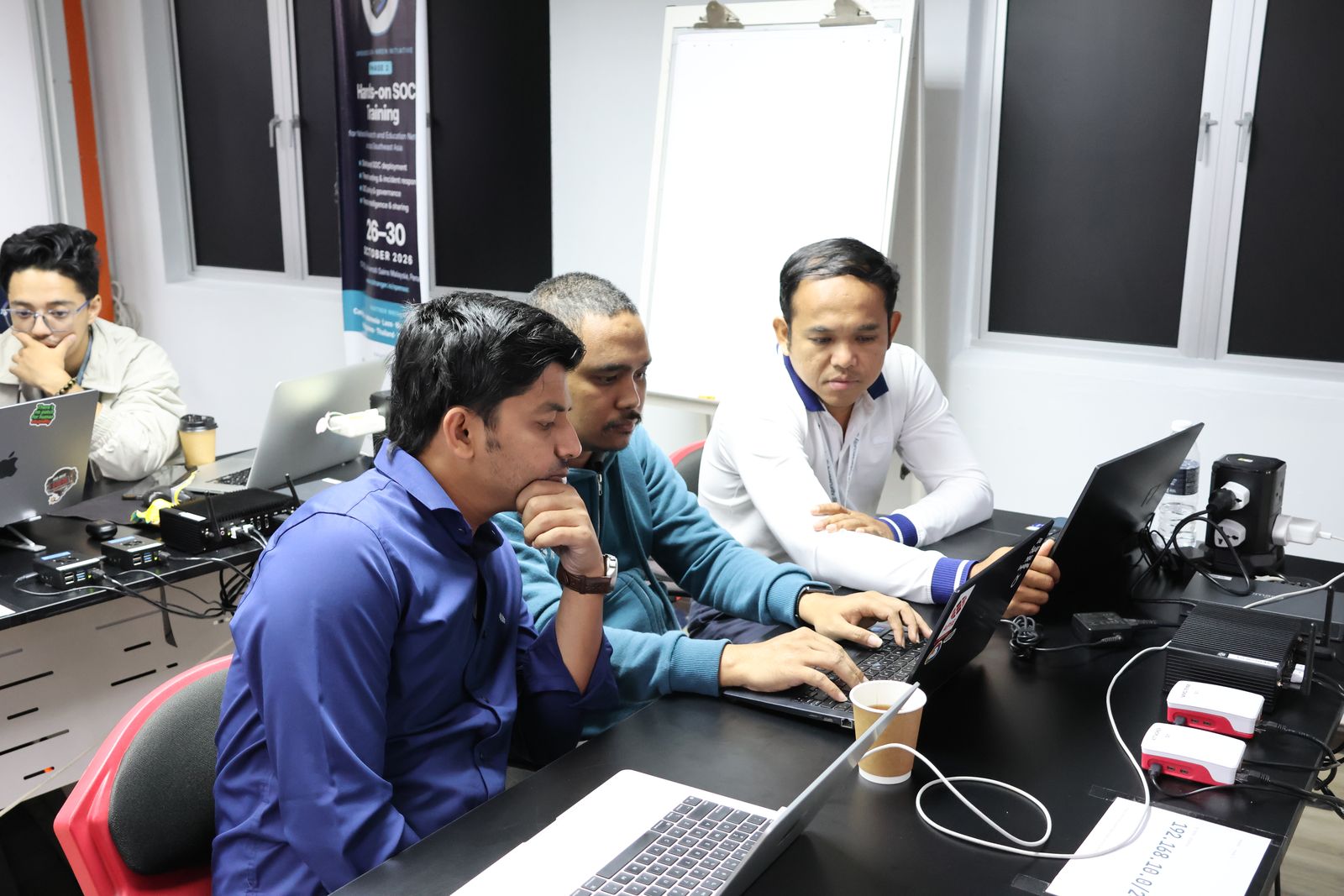
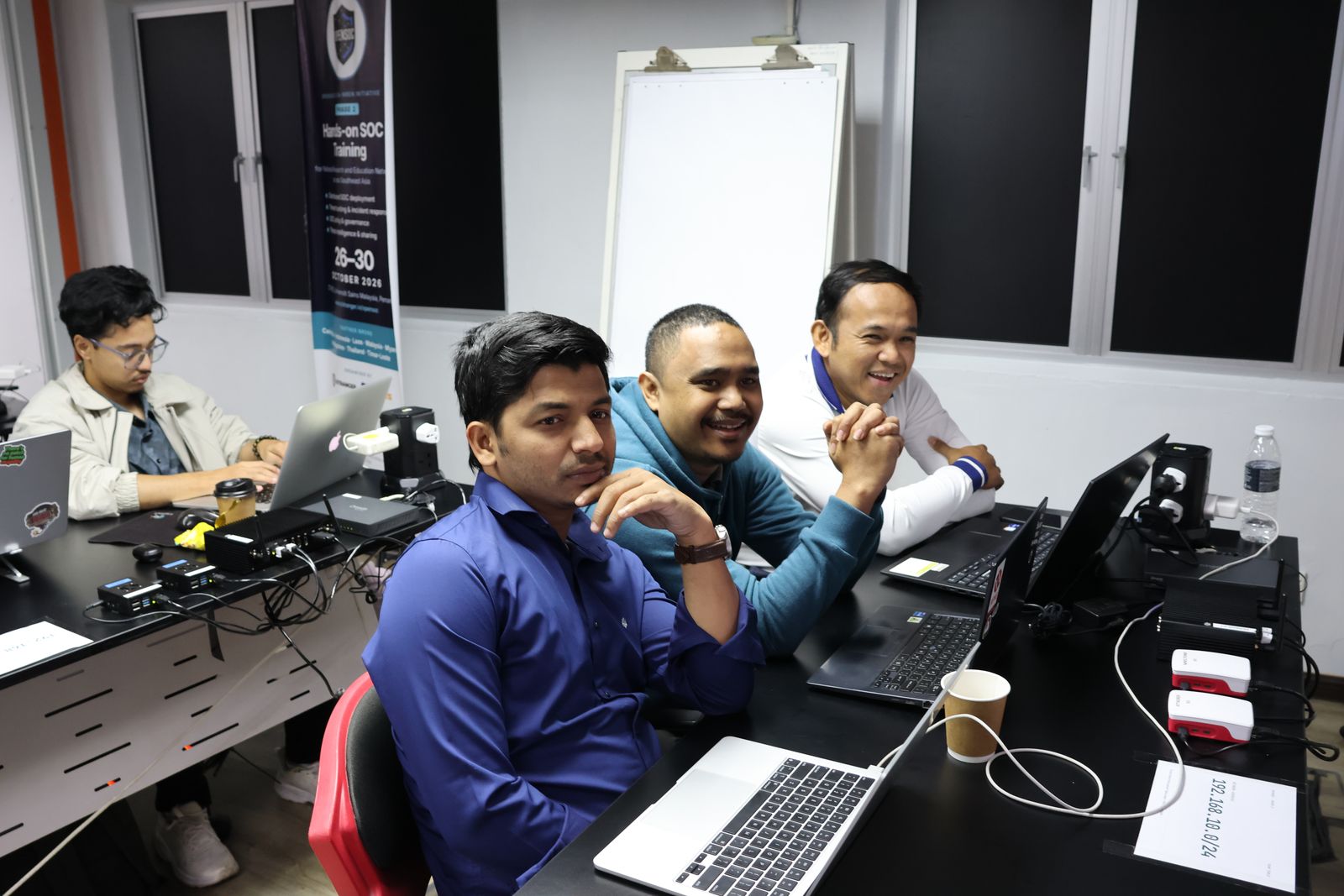
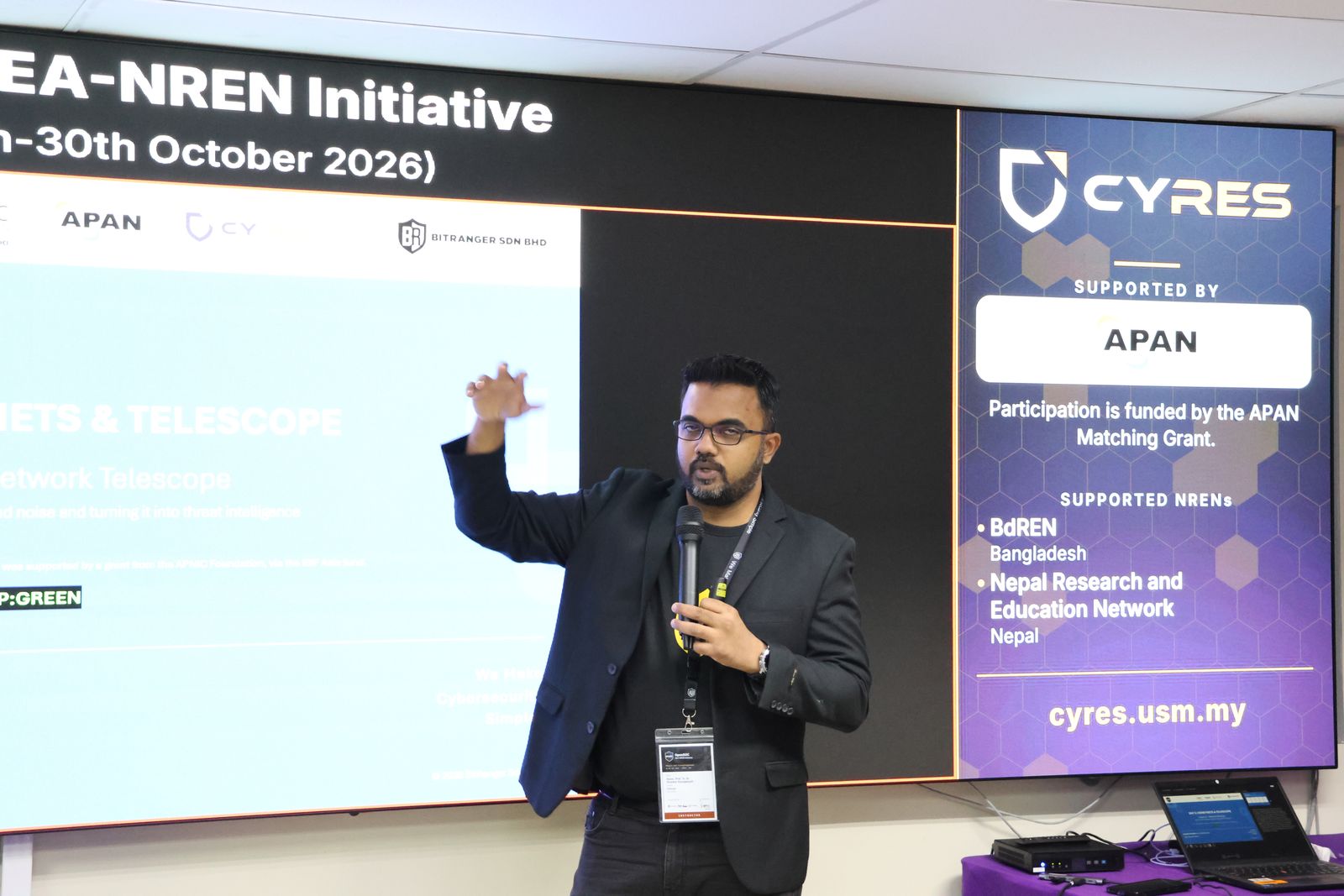
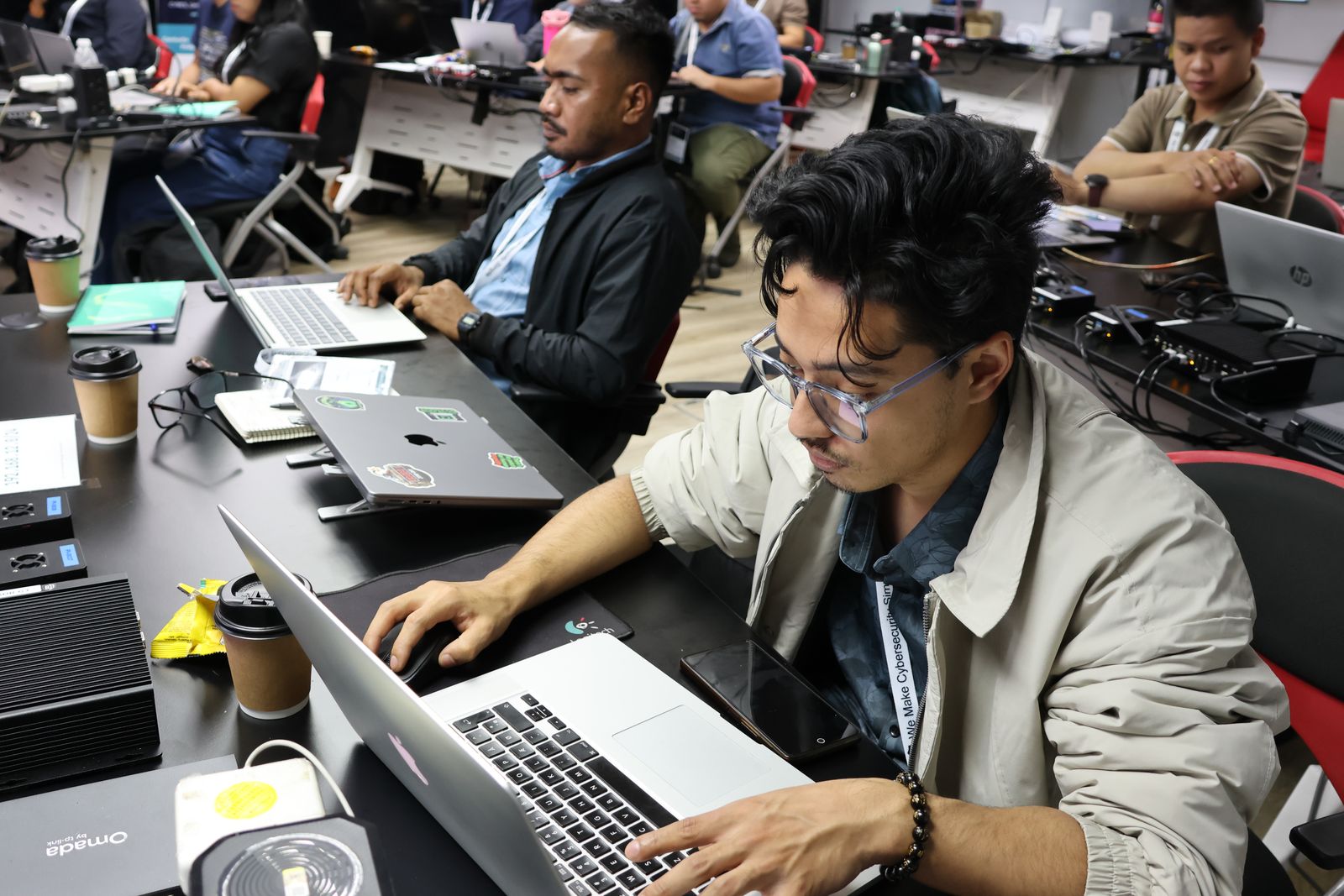
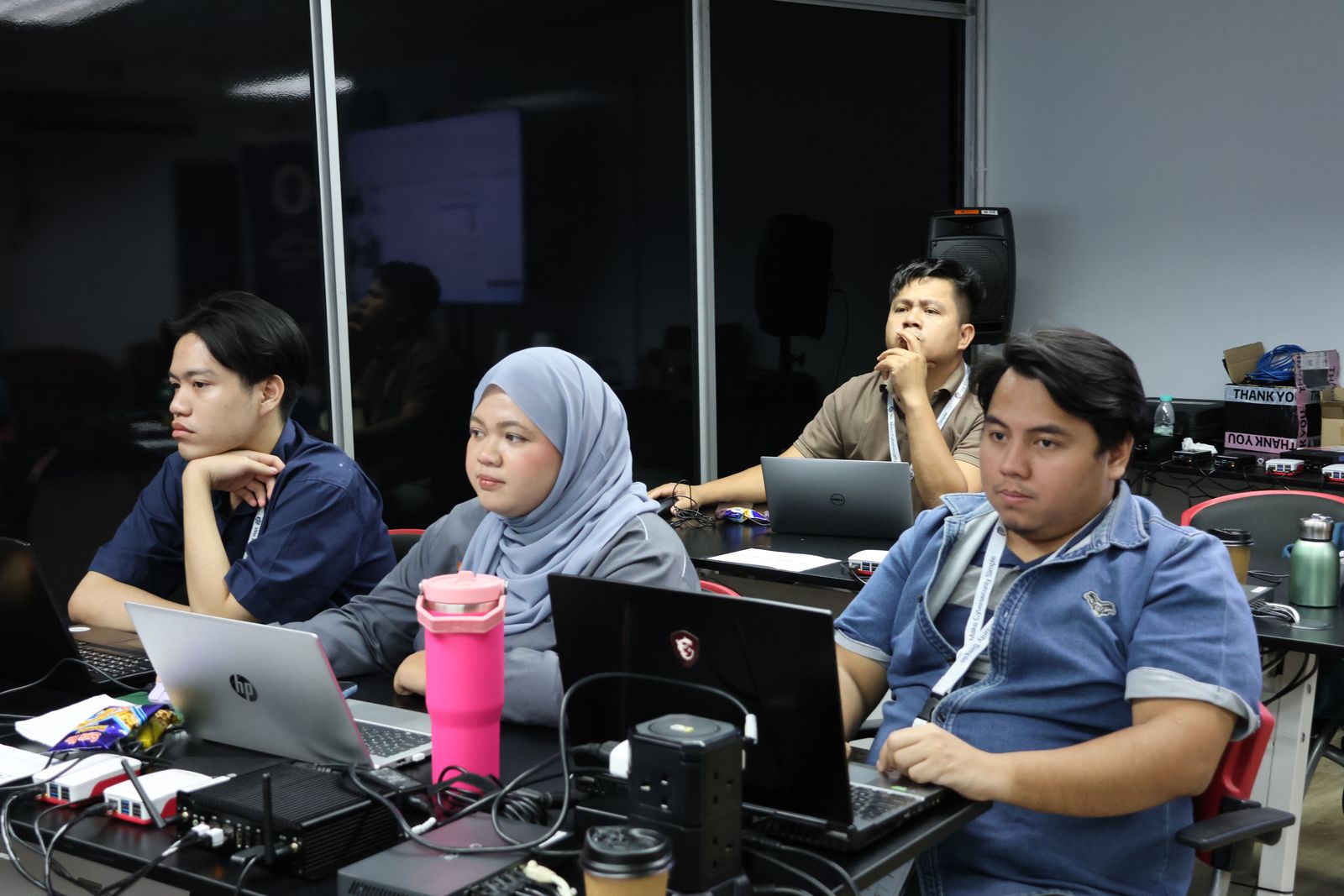
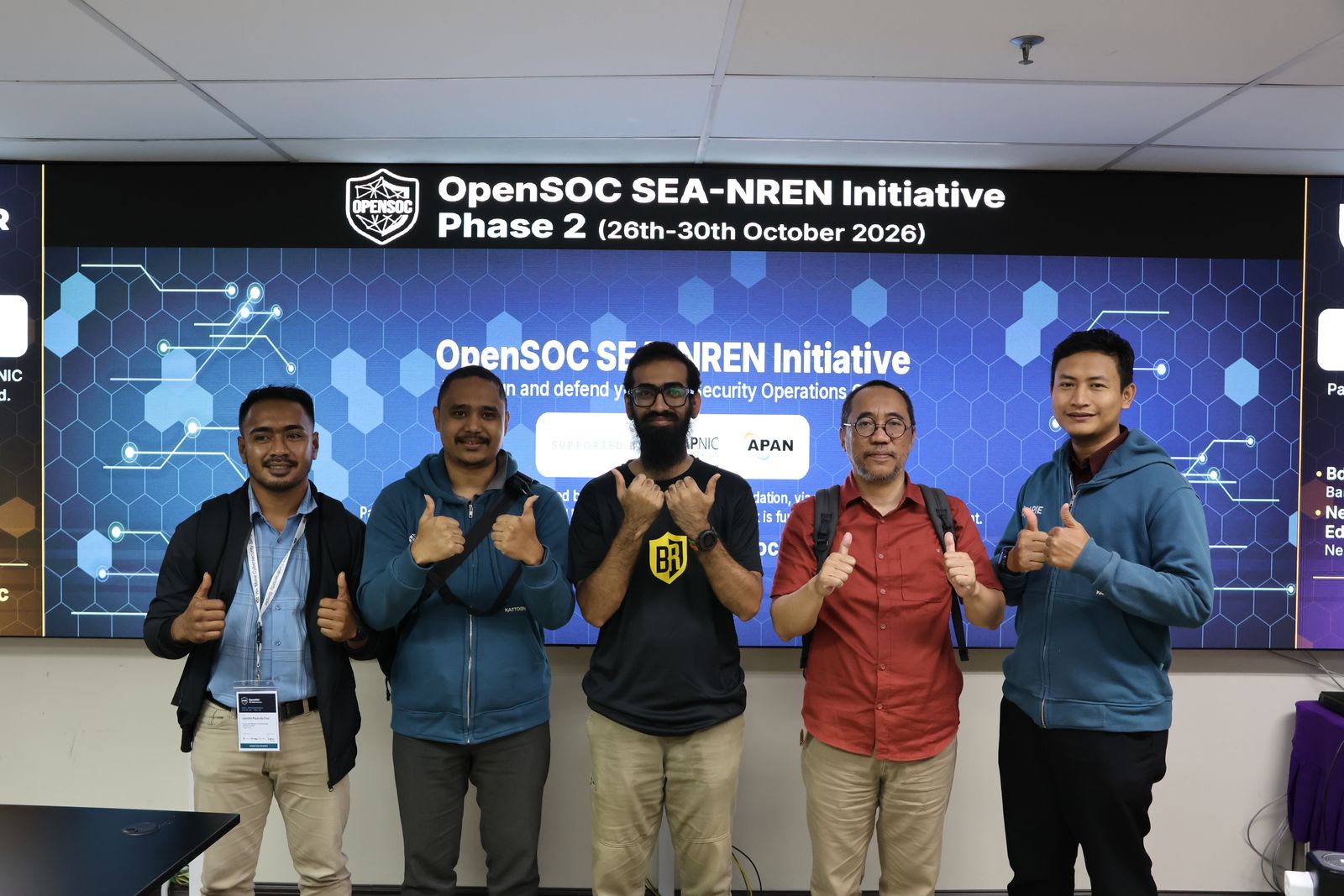
Photos from the welcome reception through the five training days: NREN teams building their SOCs, hunting threats, writing policy and deploying honeynets. Select a photo to view it full size.
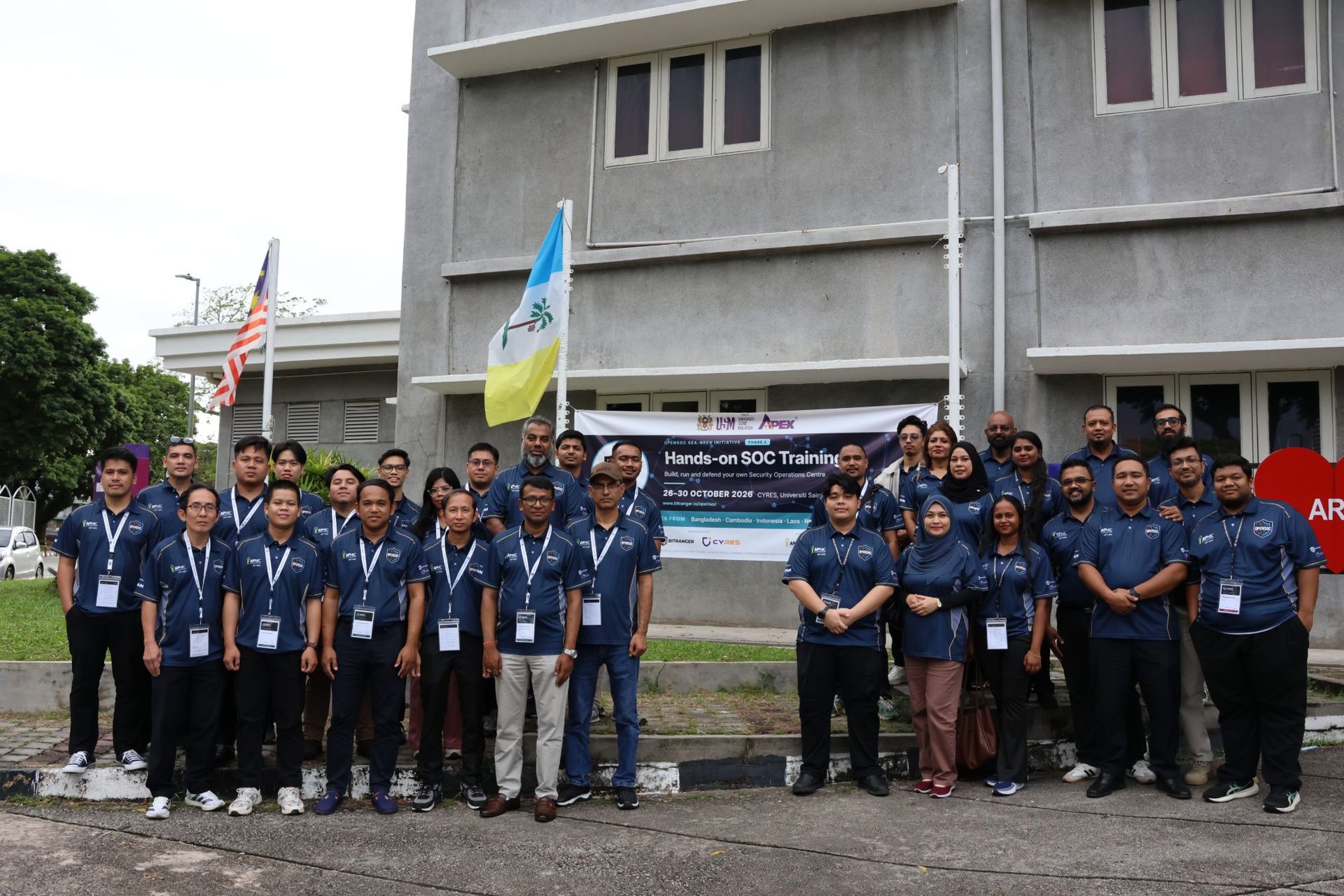
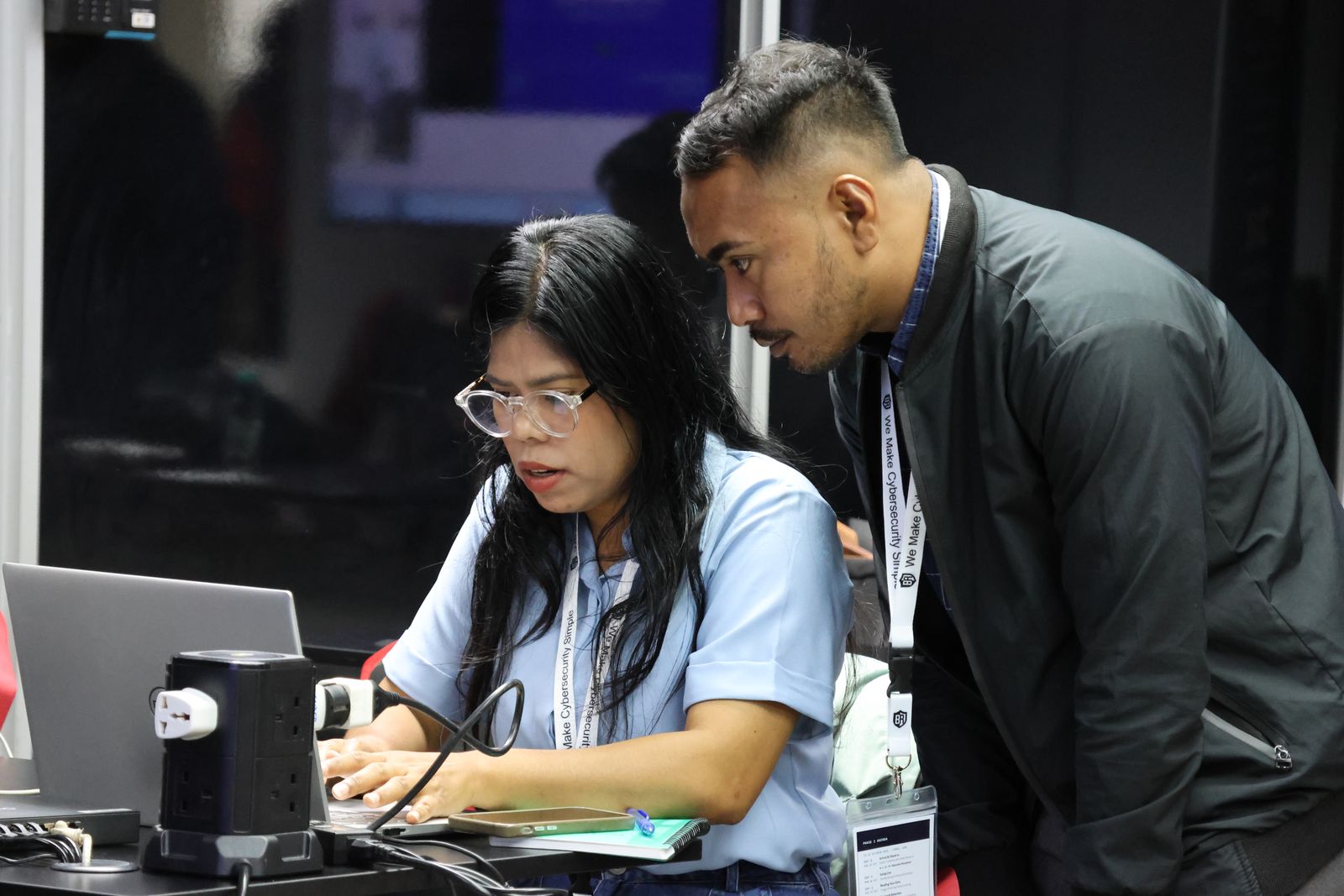
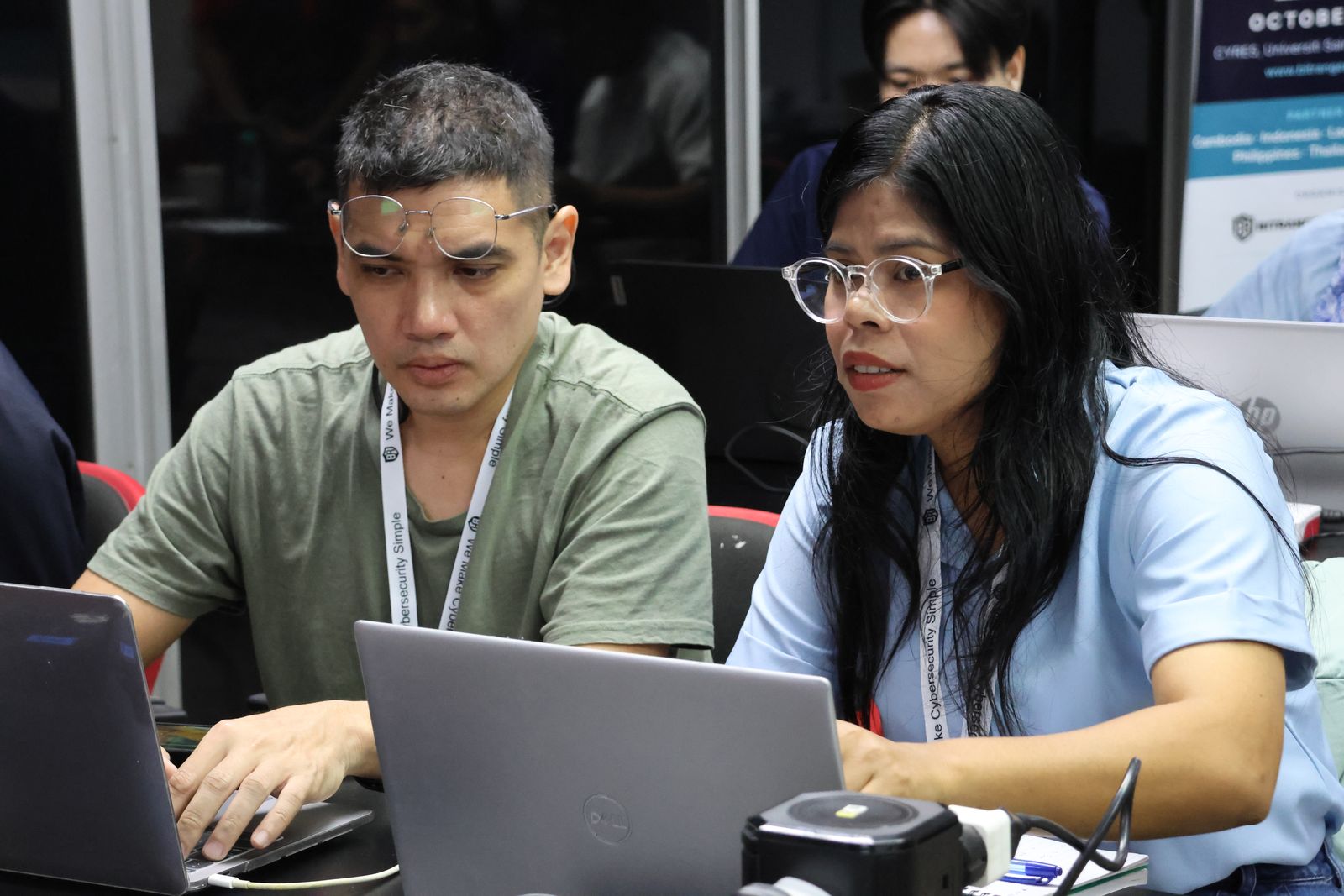
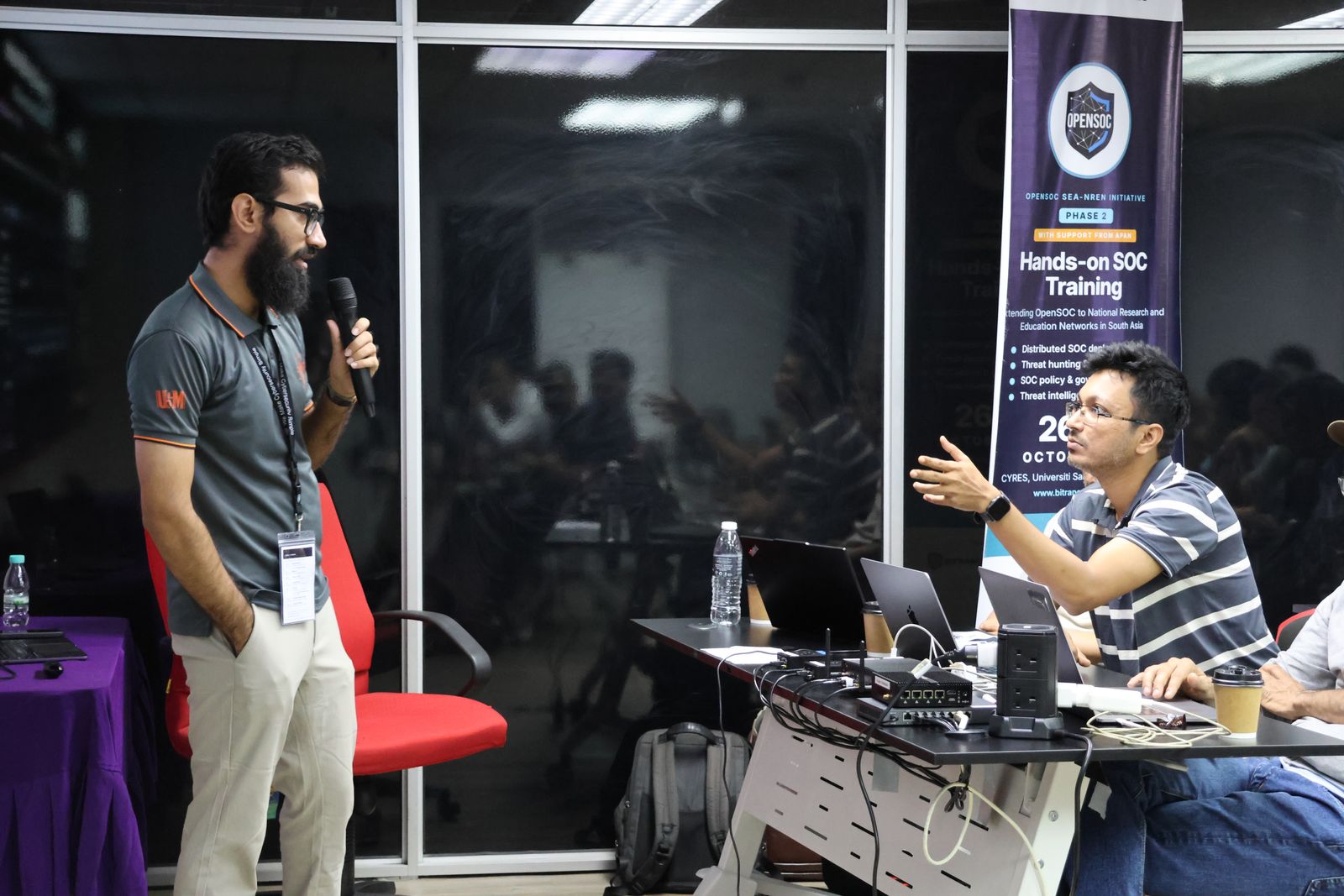
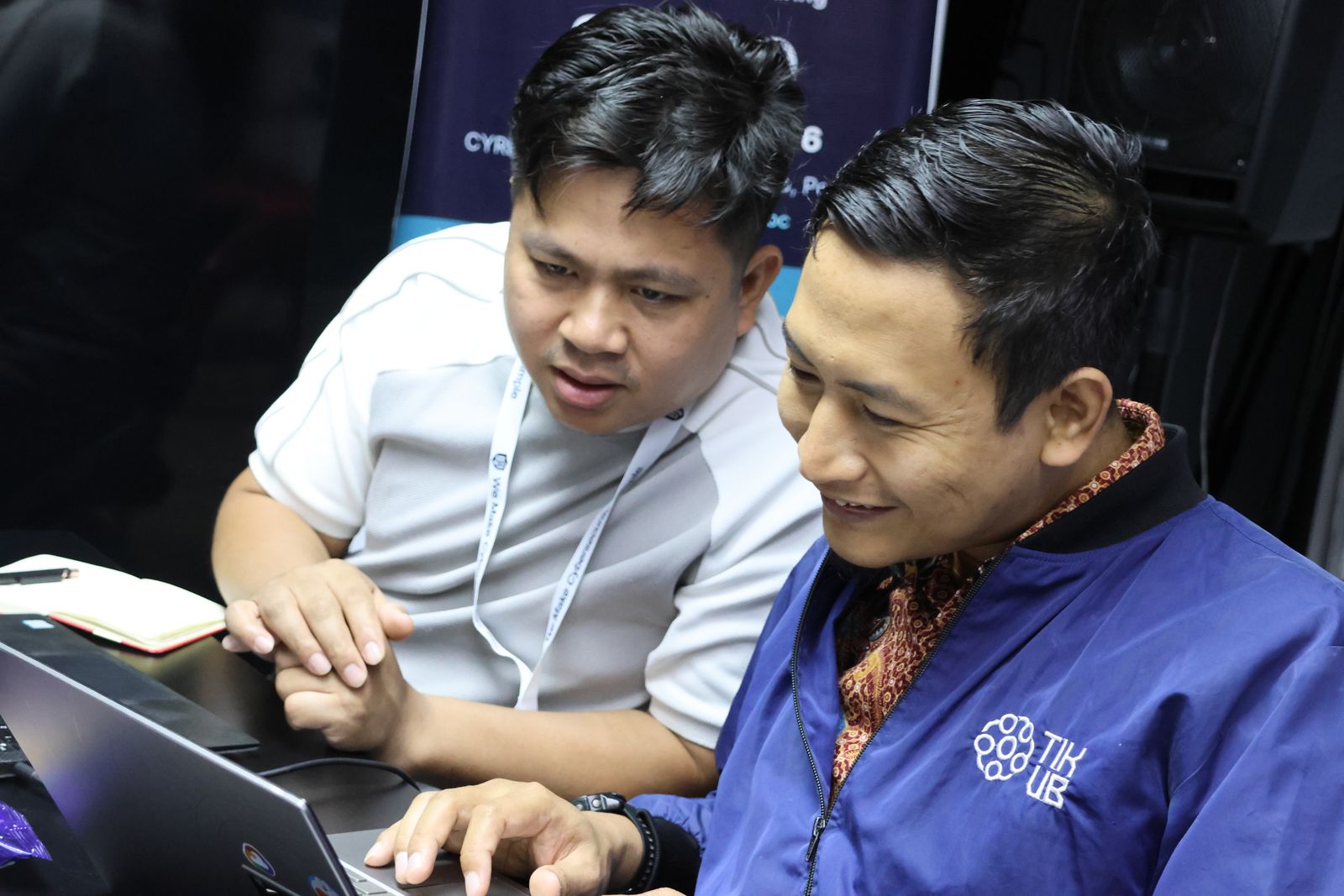
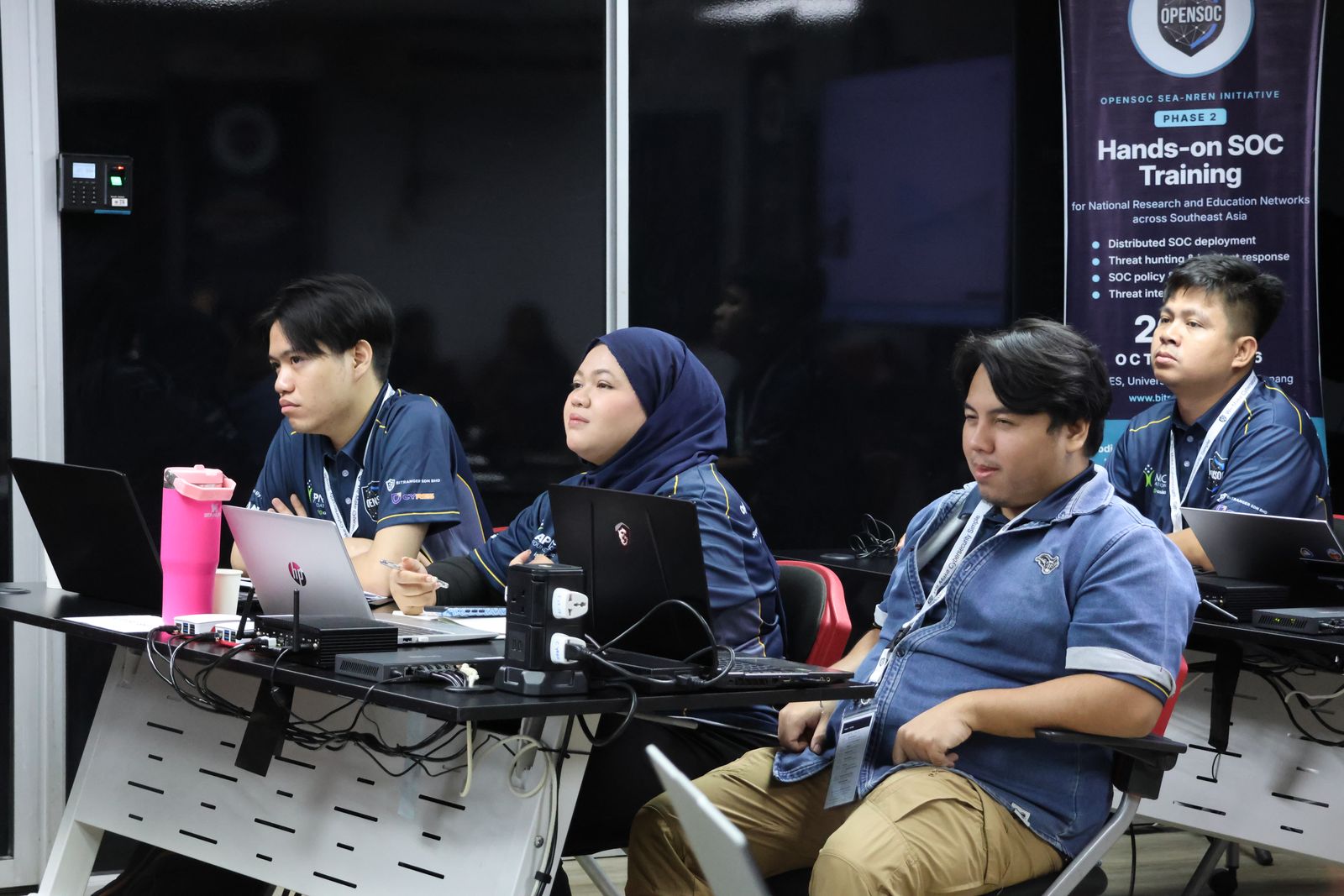
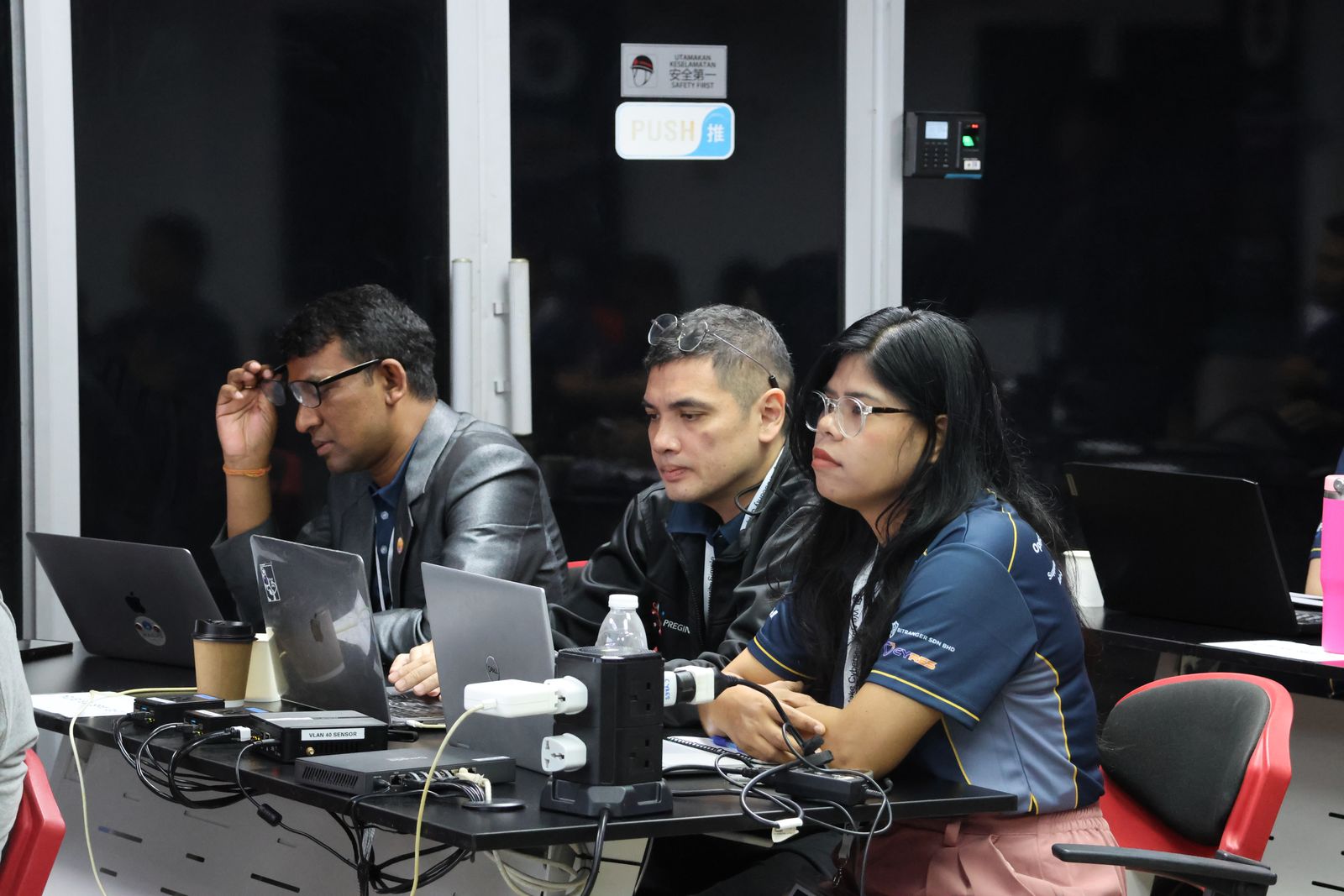
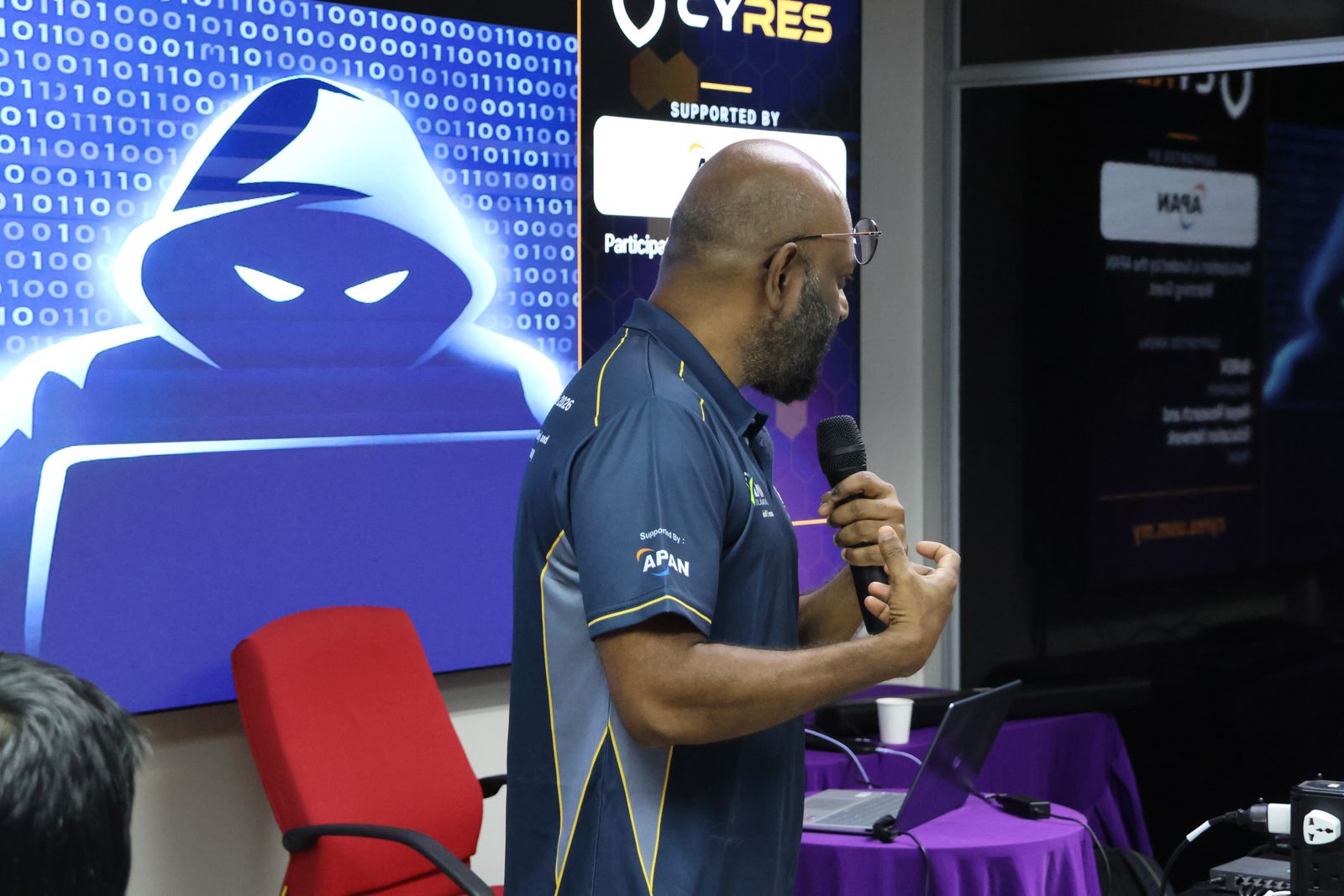
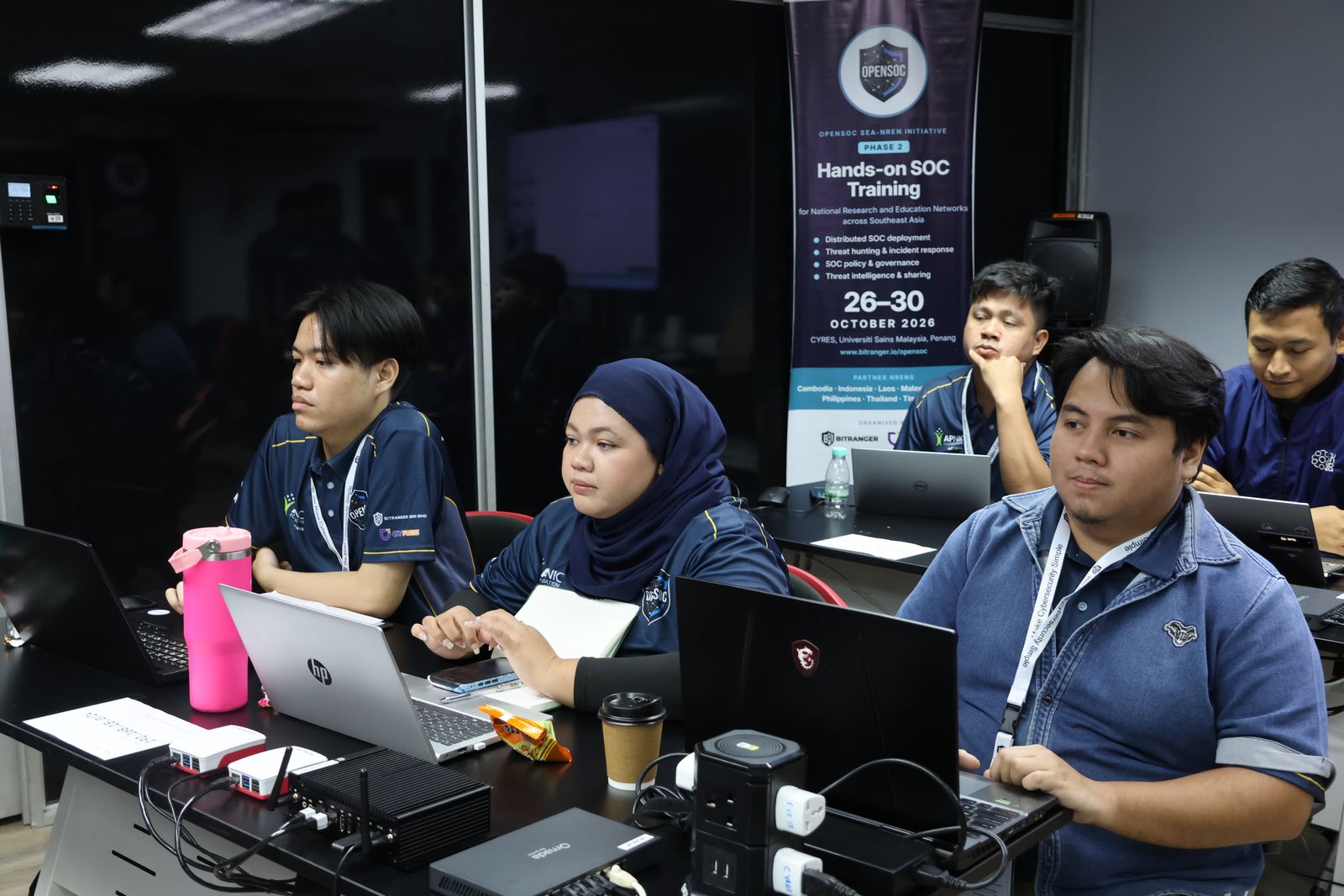
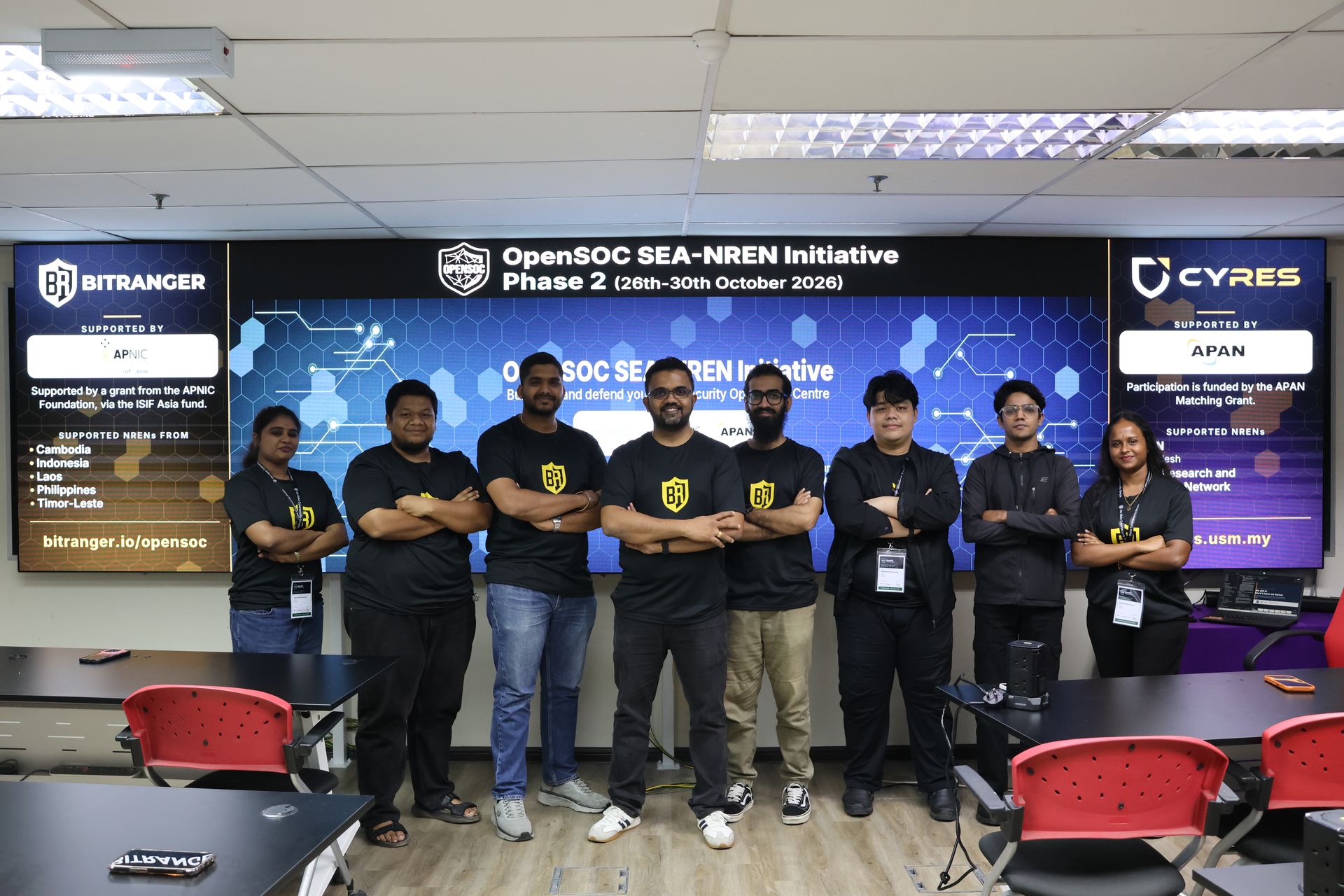
The technical team behind Phase 2
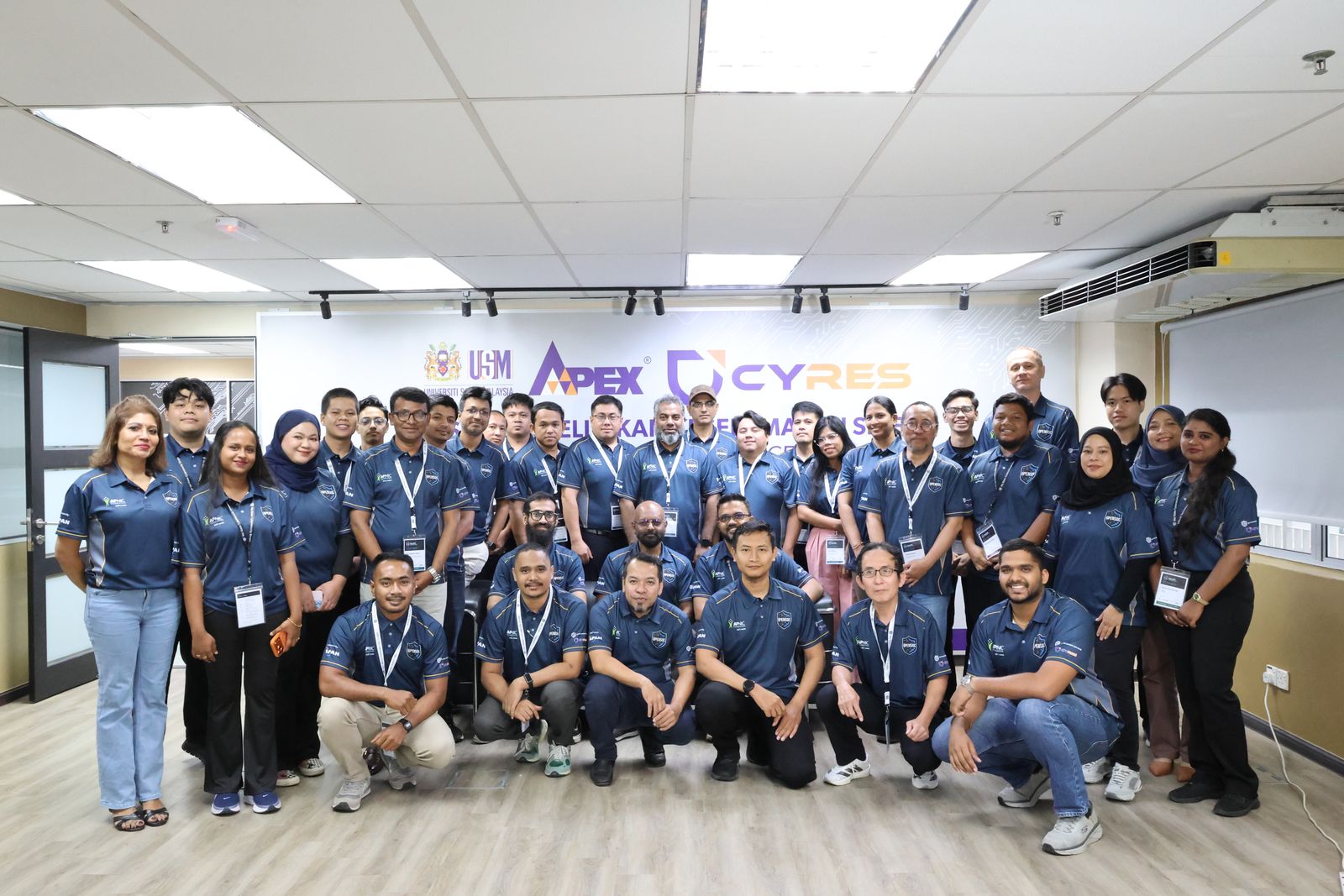
The instructors and technical mentors from BitRanger and CYRES, Universiti Sains Malaysia, who built the lab, ran the hands-on sessions and supported each team through the week.
Partners
Partner research and education networks
Bangladesh
Bangladesh Research and Education Network (BdREN)
Cambodia
Institute of Technology of Cambodia (ITC)
Indonesia
Indonesian Research and Education Network (IDREN)
Laos
LERNET, National University of Laos (NUOL)
Malaysia
Malaysia Research and Education Network (MYREN)
Myanmar
University of Computer Studies, Yangon (UCSY)
Nepal
Nepal Research and Education Network
Philippines
DOST-ASTI
Singapore
Singapore Advanced Research and Education Network (SingAREN)
Thailand
UniNet (MHESI)
Timor-Leste
Timor-Leste Research and Education Network (TLREN)
BdREN and the Nepal Research and Education Network joined through the APAN matching grant, a first step toward scaling OpenSOC across the Asia Pacific research and education community.
What's next
Phase 3: from training to production SOCs
Partner teams are now setting up SOCs in their own organisations. BitRanger mentors each team remotely on its 90-day deployment plan, with MISP-based sharing of indicators between partners and joint incident analysis. A Progress Review and Sustainability Forum is planned for Q1 2027.
Supported by

International backing for OpenSOC, our regional programme building security operations capability in eleven countries.
Join the community
Research and education networks interested in OpenSOC can contact us to learn more.